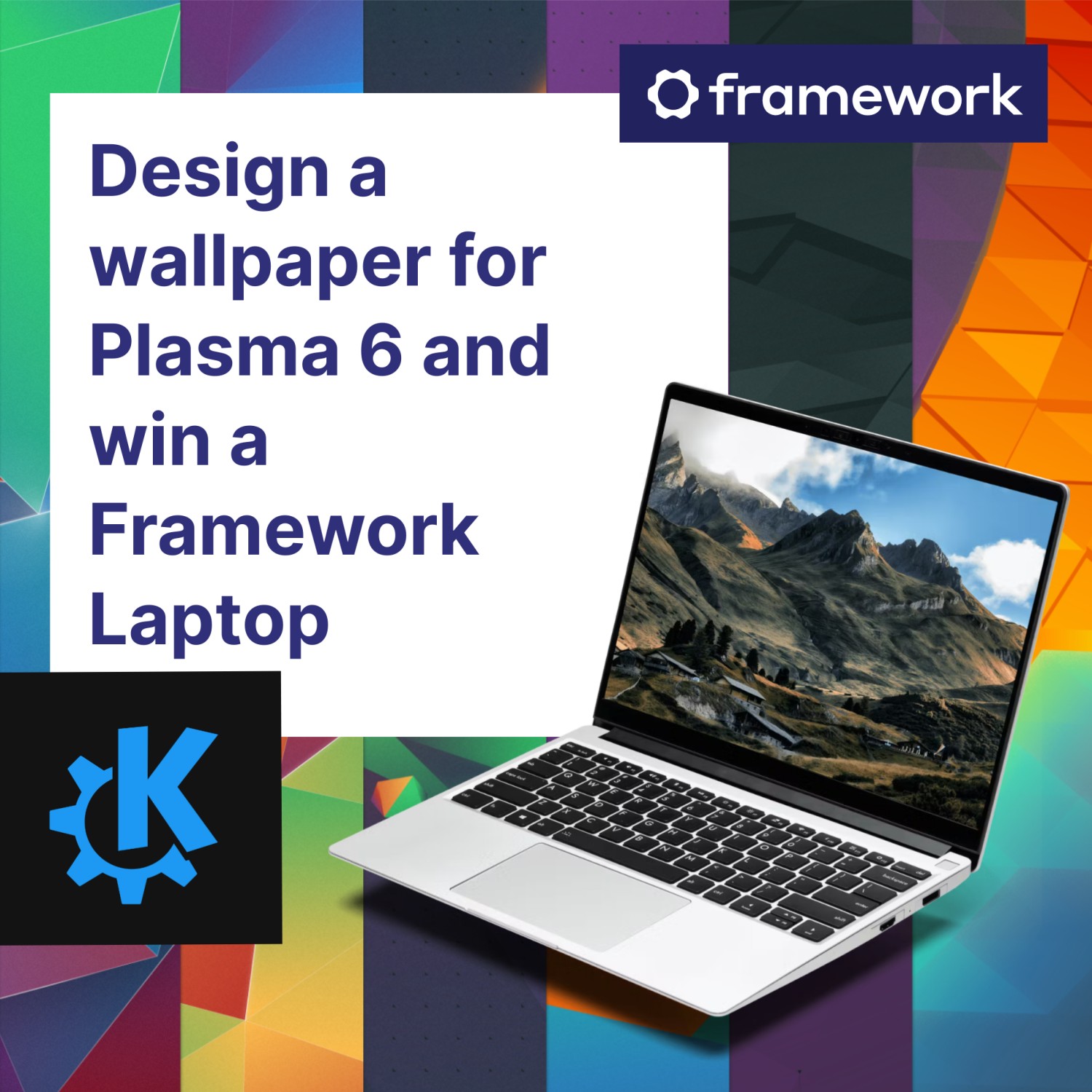
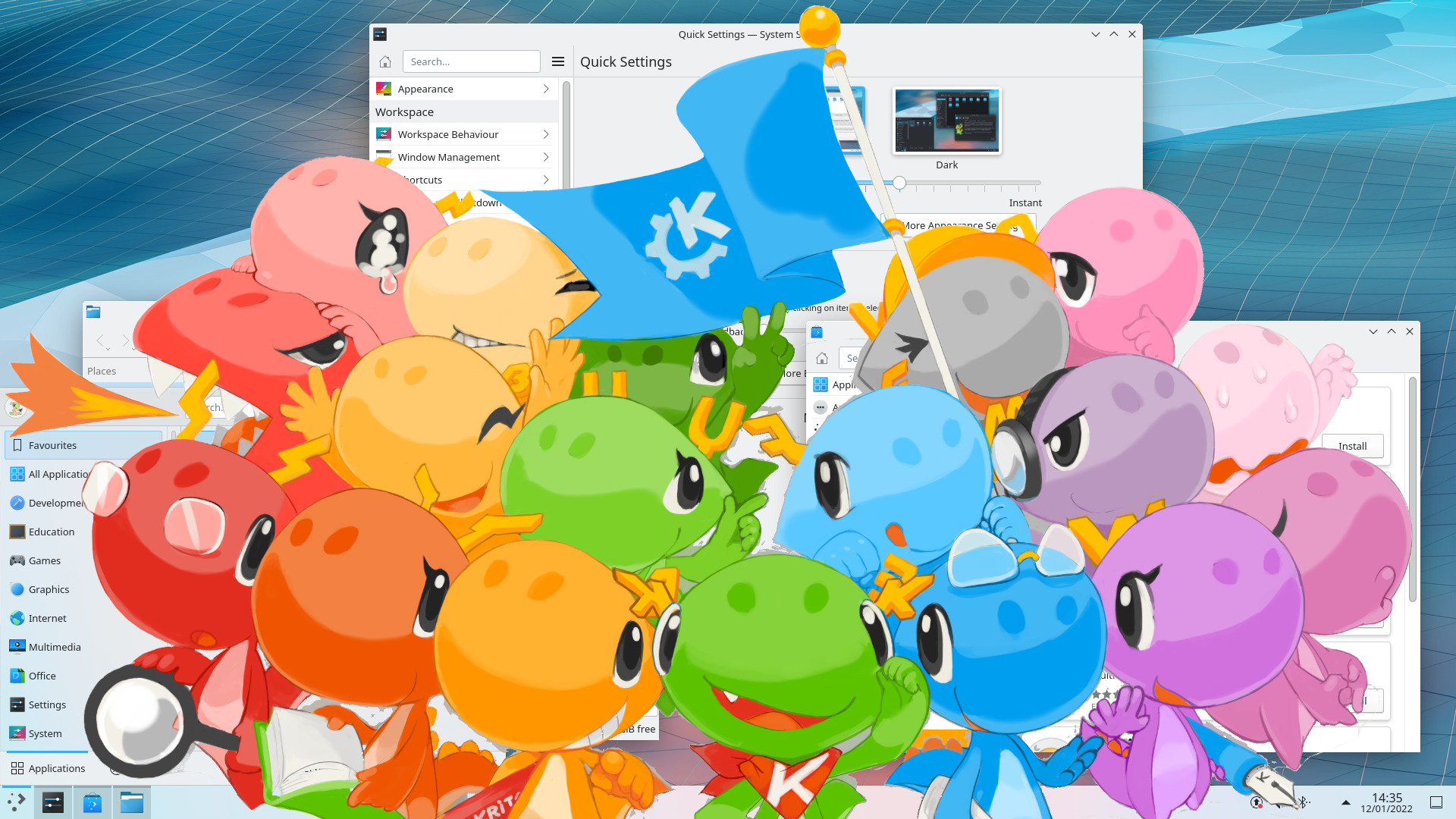
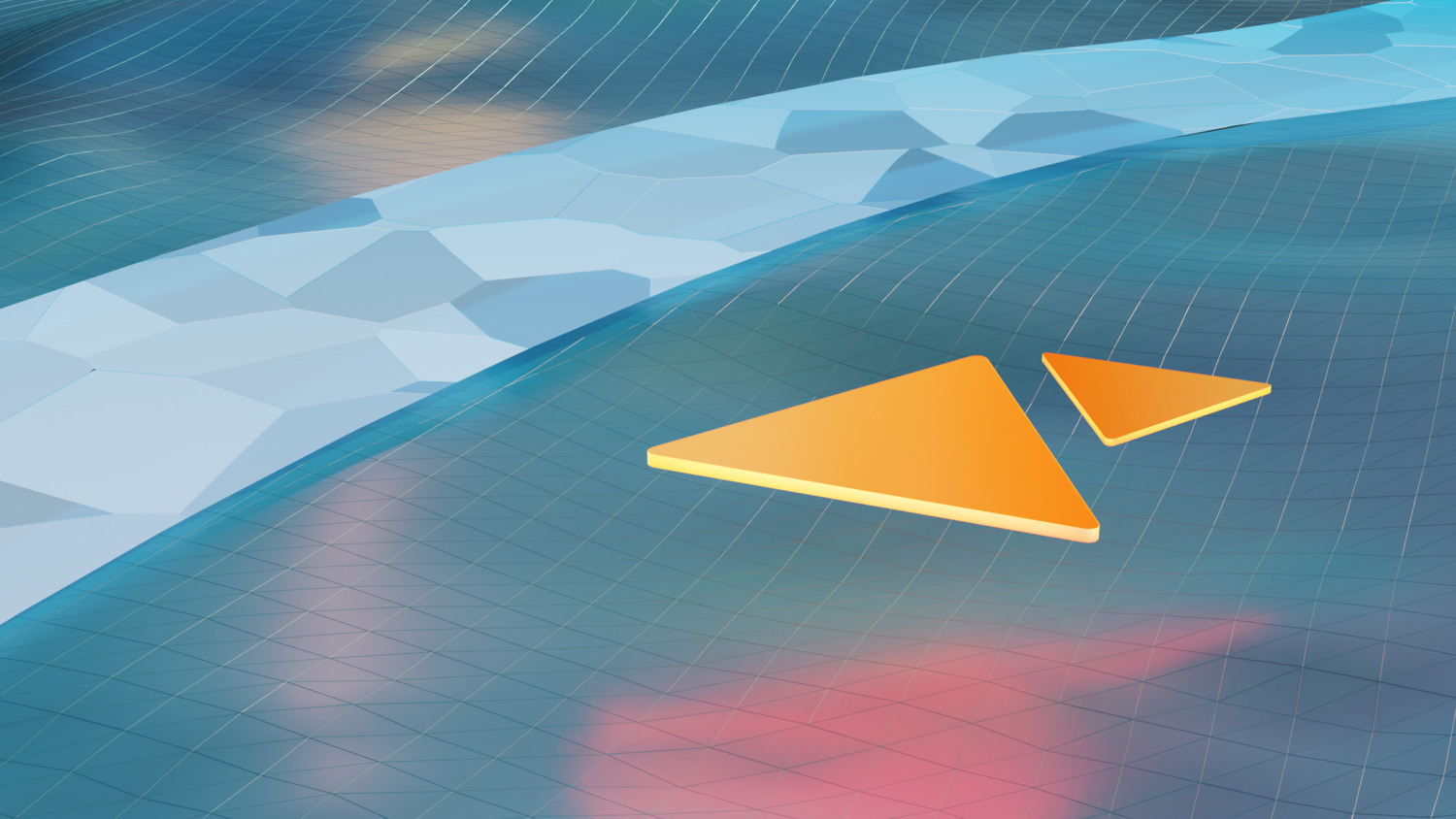
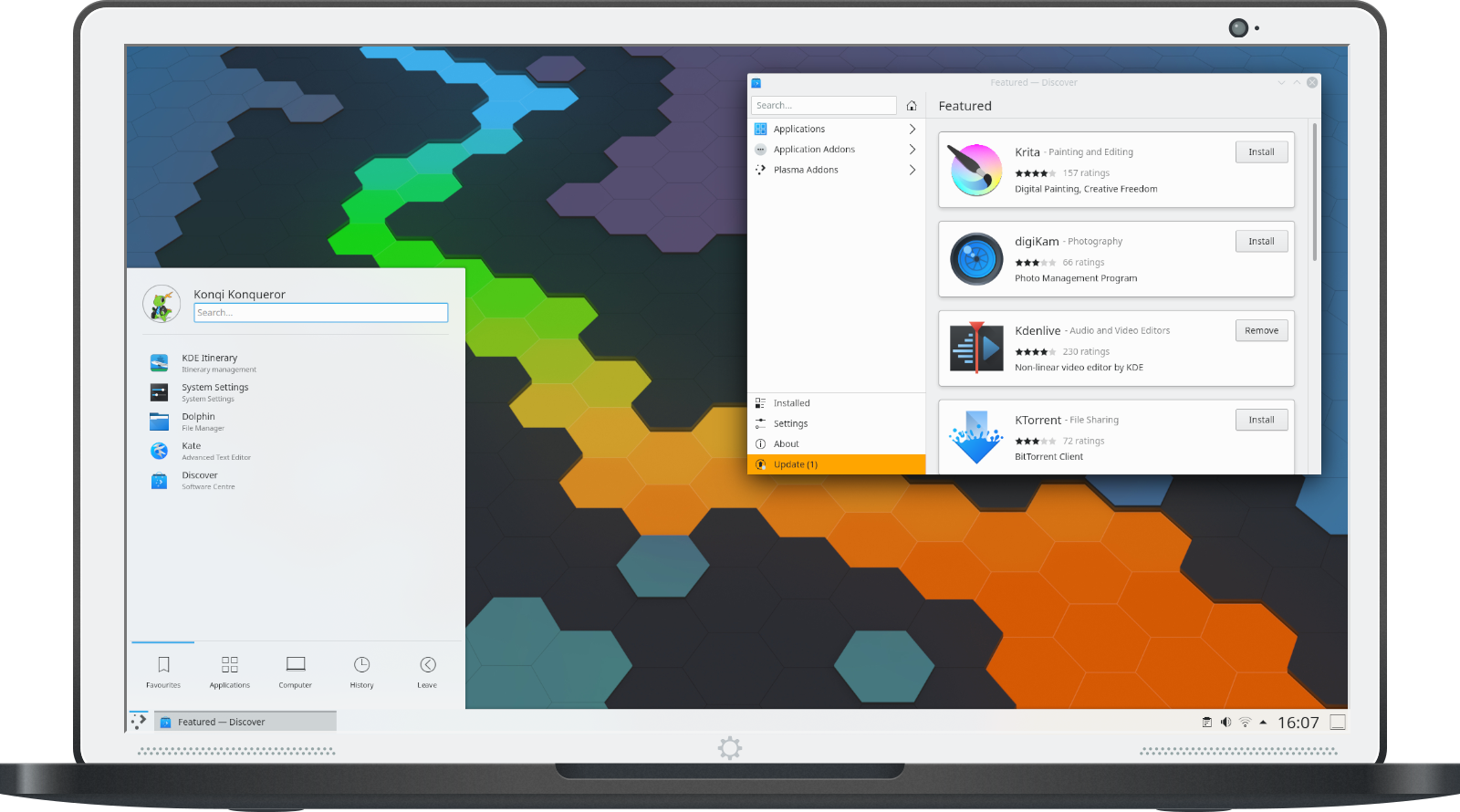
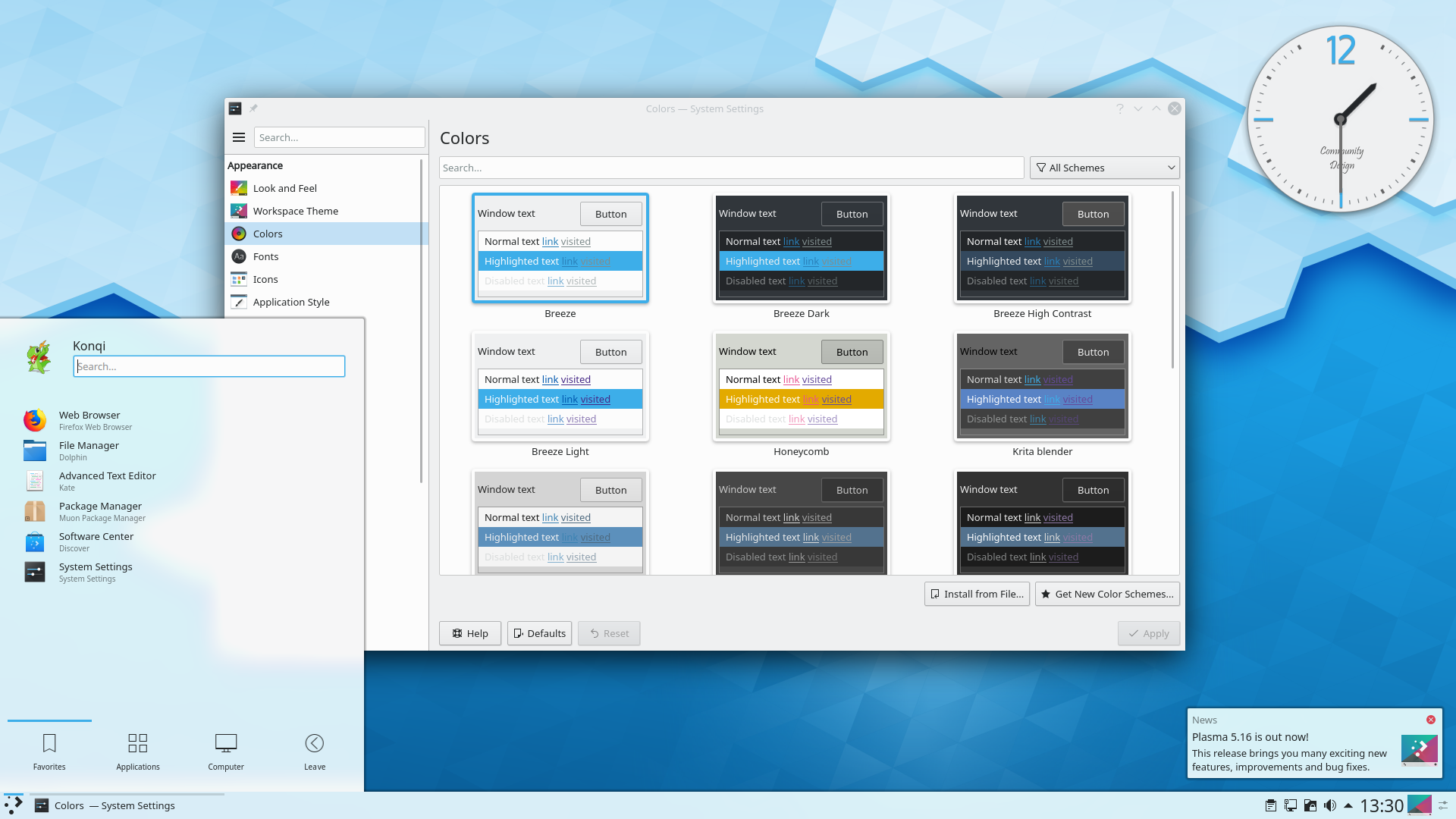
Plasma 6 release day is getting closer... and we still have no wallpaper to use! But we're going to change that with your help and this contest! We are calling on all artists to submit their original wallpaper designs and compete for the chance to win a brand-new laptop (see below). The contest will be open for three months, starting now!
MBition becomes a KDE patron and supports the work of the KDE community with its generous sponsorship.
MBition designs and implements the infotainment system for future generations of Mercedes-Benz cars and relies on KDE's technology and know-how for its products.
On the 22nd of June 1998, the KDE Free Qt Foundation was founded and has accompanied Qt on its amazing journey to become the success story that it is today.
For this year's edition of Season of KDE, 8 participants successfully completed their projects. Several of the projects push forward the work to achieve KDE's three goals, namely:
g10 Code GmbH joins the ranks of KDE patrons! g10 Code provides custom development, enhancements, and audits of cryptographic software -- in particular for the popular GnuPG encryption and digital signature tools.
Kubuntu Focus offers the best out-of-the-box experience for professional Linux users. All Kubuntu Focus systems come with the beautiful and intuitive Plasma desktop from KDE on top of industry-standard Ubuntu LTS. The hardware is designed to save time and hassle, thanks to its device optimizations, curated apps, Focus Tools, system-specific HOWTOs, and excellent Linux support.
From the notes by Aniqa Khokhar, Jonathan Esk-Riddell, and Paul Brown
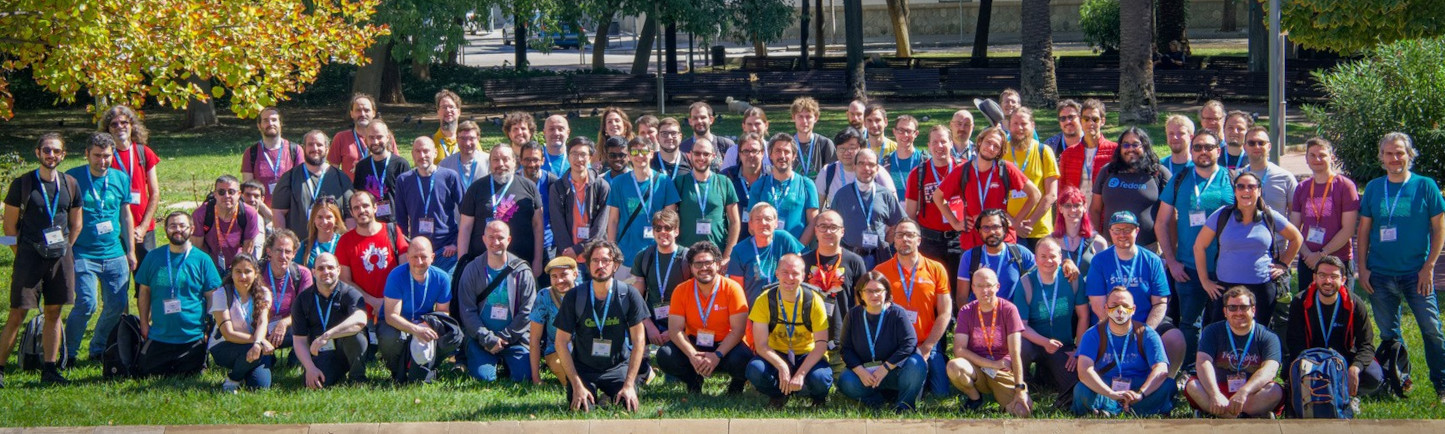
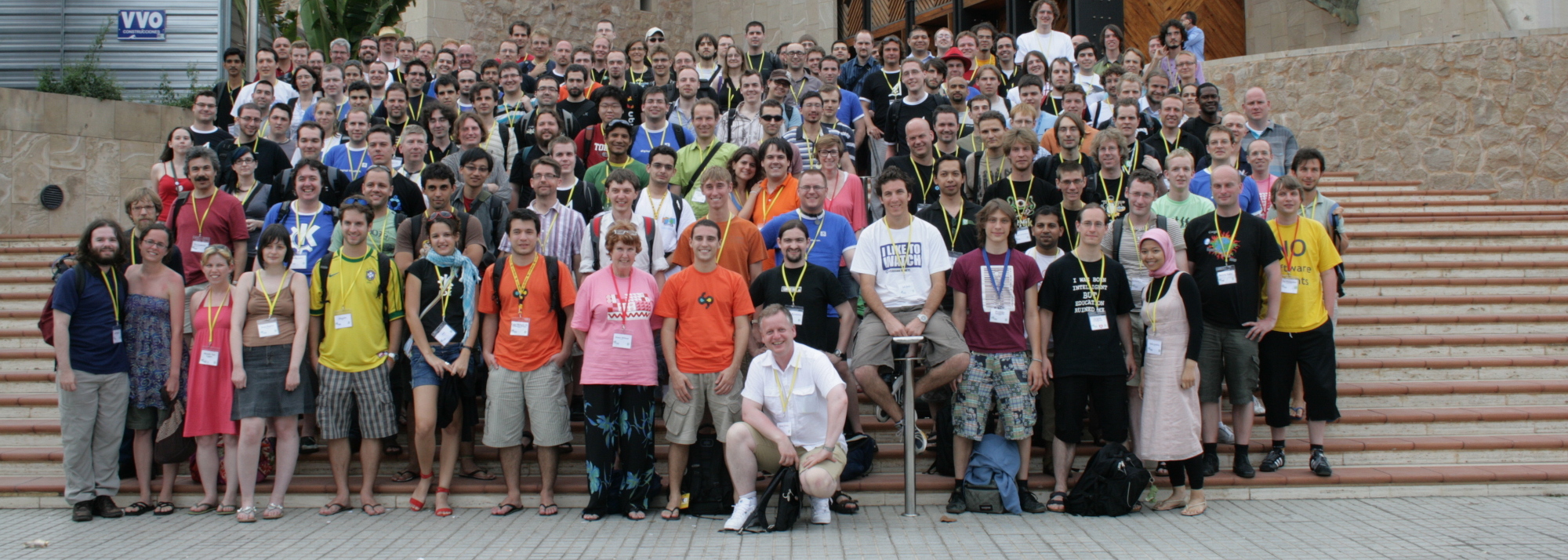
Akademy 2022 was held in Barcelona from the 1st to the 7th of October. As usual, the weekend of Saturday 1st of October and Sunday 2nd of October was dedicated to talks, panels and presentations. Community members and guests laid out for attendees what had been going on within KDE's projects (and adjacent projects), the state of the art, and where things were headed.
Today we break ground. Today we launch the first of what will be many fundraisers for specific projects. Our goal is to get funds directly into the hands of the people who make the software.
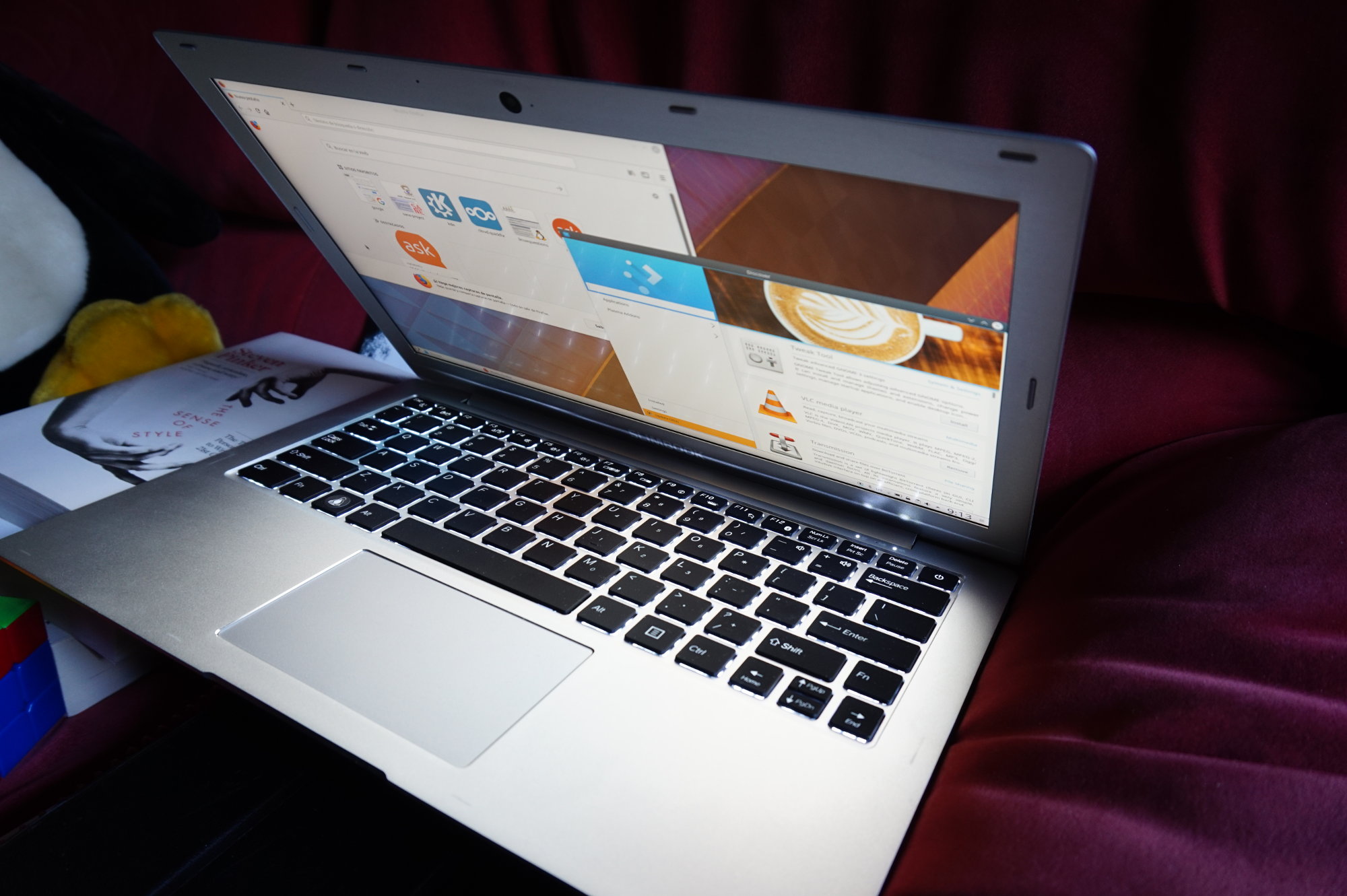
The KDE Slimbook 4 comes with a Ryzen 5700U processor and KDE's full-featured Plasma desktop running on KDE Neon. It also comes with dozens of Open Source programs and utilities pre-installed and access to hundreds more.
Season of KDE, the program that helps people start contributing to KDE easily, kicks off with nine fascinating projects:
Ayush Singh will be working on a Rust wrapper for KConfig. With this wrapper, and the existing ones for qmetaobject and ki18n, it will be easier to develop KDE applications in Rust. More information can be found in the kde-devel mailing-list. Ayush will be mentored by Jos van den Oever.
Pablo Marcos will add a new panel to show notifications on Tokodon, KDE's Mastodon client. Pablo will be mentored by Carl Schwan.
Snehit Sah will help package more KDE applications for Flathub. Some packages are nearly ready for Flathub, but are missing information or manifest files, so they are not yet available on the platform. The goal of the project is to improve the existing packages and publish more apps on Flathub. Snehit will be mentored by Timothée Ravier.
Suhaas Joshi will work on the permission management for Flatpak Apps in Discover. The aim is to allow users view permissions required by a flatpak before installation and also allow users to turn these permissions on or off. After the installation of a flatpak package, Discover will let users view and alter its permissions. Suhaas will be mentored by Timothée Ravier and Aleix Pol Gonzalez.
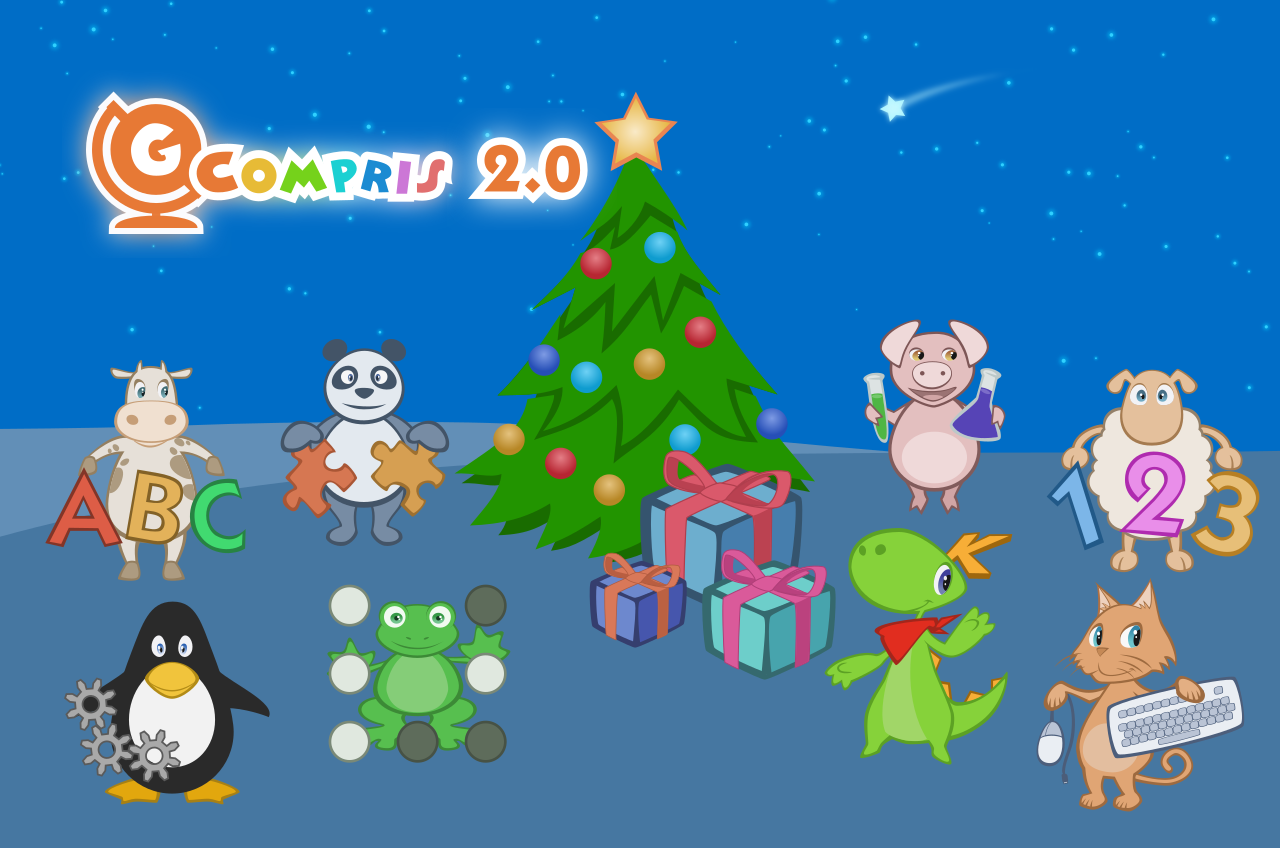
Samarth Raj will add a new activity help understand the difference between left- and right-clicking using a mouse in GCompris. The activity will show two types of animals that want to go home. Left-clicking will move one kind, while right-clicking will move the other. Find out more about this activity here. Samarth will be mentored by Harsh Kumar and Emmanuel Charruau.
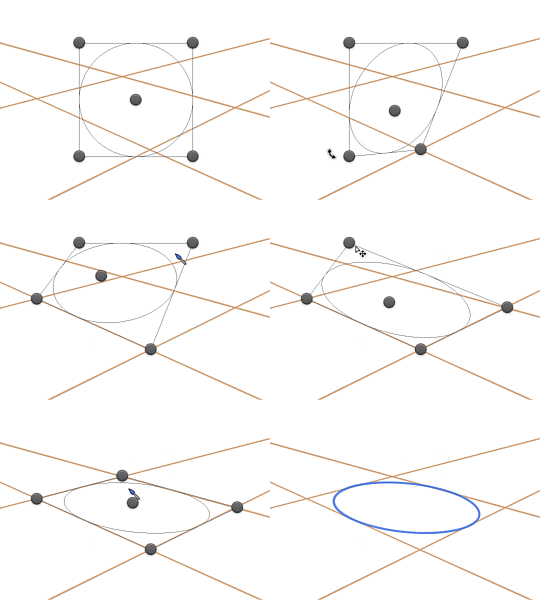
Perspective Ellipse tool
Srirupa will add support for a Perspective Ellipse feature in Krita. The aim is to create a tool that can adjust four corners of a mesh with an ellipse inside it. This will allow users to draw an ellipse in perspective with ease. Srirupa will be mentored by Halla Rempt.
Soumik Dutta will document KDE Connect's communication protocol. Soumik will create comprehensive documentation covering the API contracts and the Event Action Pathways, validate the generated documentation, decide the layout, and merge the work into the existing documentation. Soumik will be mentored by Apollo Zhu and Lucas Wang.
For the KDE-eco project, Karanjot Singh will prepare Standard Usage Scenarios for Energy Consumption Measurements. The first step will be to select an automatic tool to reproduce scenarios and then to define/write scenarios to test the energy consumption for multiple KDE/FOSS projects, such as Kate, KWrite, Vim, nano, emacs, etc. Finally, Karanjot will implement the scenarios. Karanjot will be mentored by Joseph P. De Veaugh-Geiss.
Stefan Kowalczyk will improve the user experience for KDE Connect's iOS Internal Error and Alerts. iOS does not allow for multiple alerts at the same time, so the aim of the project is to queue alerts for KDE Connect if there are more than one, and display them one after the other. Stefan will be mentored by Apollo Zhu and Lucas Wang.
We hope all participants have fun with their projects and look forward to your achievements!
The Linux App Summit (LAS) of 2022 will be held in Rovereto, a picturesque city at the foot of the Italian Alps.
Whether you are a company, journalist, developer, or user interested in the ever-growing Linux app ecosystem, LAS will have something for you. Scheduled for April, LAS 2022 will be a hybrid event, combining on-site and remote sessions, including talks, panels and Q&As.
On 11 December 2021, KDE Eco held the first of many planned Sprints. The Sprint was originally intended to be an in-person event to set up a community measurement lab, but Corona had other ideas. Nevertheless, the community deployed its usual resourcefulness, and we met online instead.
TUXEDO Computers, a company known for selling Linux-powered computers and notebooks, now joins us as a KDE Patron!
"Our customized Linux notebooks (for work or play) are equipped with KDE Plasma, which leads to a positive response from our customers", said Herbert Feiler, CEO TUXEDO Computers. "Furthermore, we additionally do our own development work, which could benefit KDE as upstream as well. We are happy to share our knowledge and would like to secure as well as expand KDE's development work in the long run. Feedback that we receive from customers can also flow directly into KDE's development work."
We are happy to announce the winner of the Plasma 25th Anniversary Edition Wallpaper Contest!
Thanks to all those who submitted their artwork. The variety and quality of the submissions in this edition was simply astounding. As always, there were multiple great options and it was very hard to choose. It was a very close call! But at the end, we have a winner: Patak by Aron!
After 4 days + 1 morning of BoFs, hacking sessions and meetings, talks at Akademy resumed in room 1 on Friday at 17:00 UTC. Kevin Ottens and Christelle Zouein from enioka Haute Couture kicked things off with the talk Community's Adventures in Analyticsland - Or the State of the Community Through New Analytics. Christelle and Kevin showed us the data analysis tools they have been working on to study information collected from KDE's development repositories and the surprising facts and trends they discovered.
The day started at 8:00 UTC sharp with four very interesting lightning talks. Kai Uwe Broulik talked about how to become productive using Plasma at home. He pointed out tips and tricks that allow you to avoid interruptions and improve your time working from your couch.
Read More
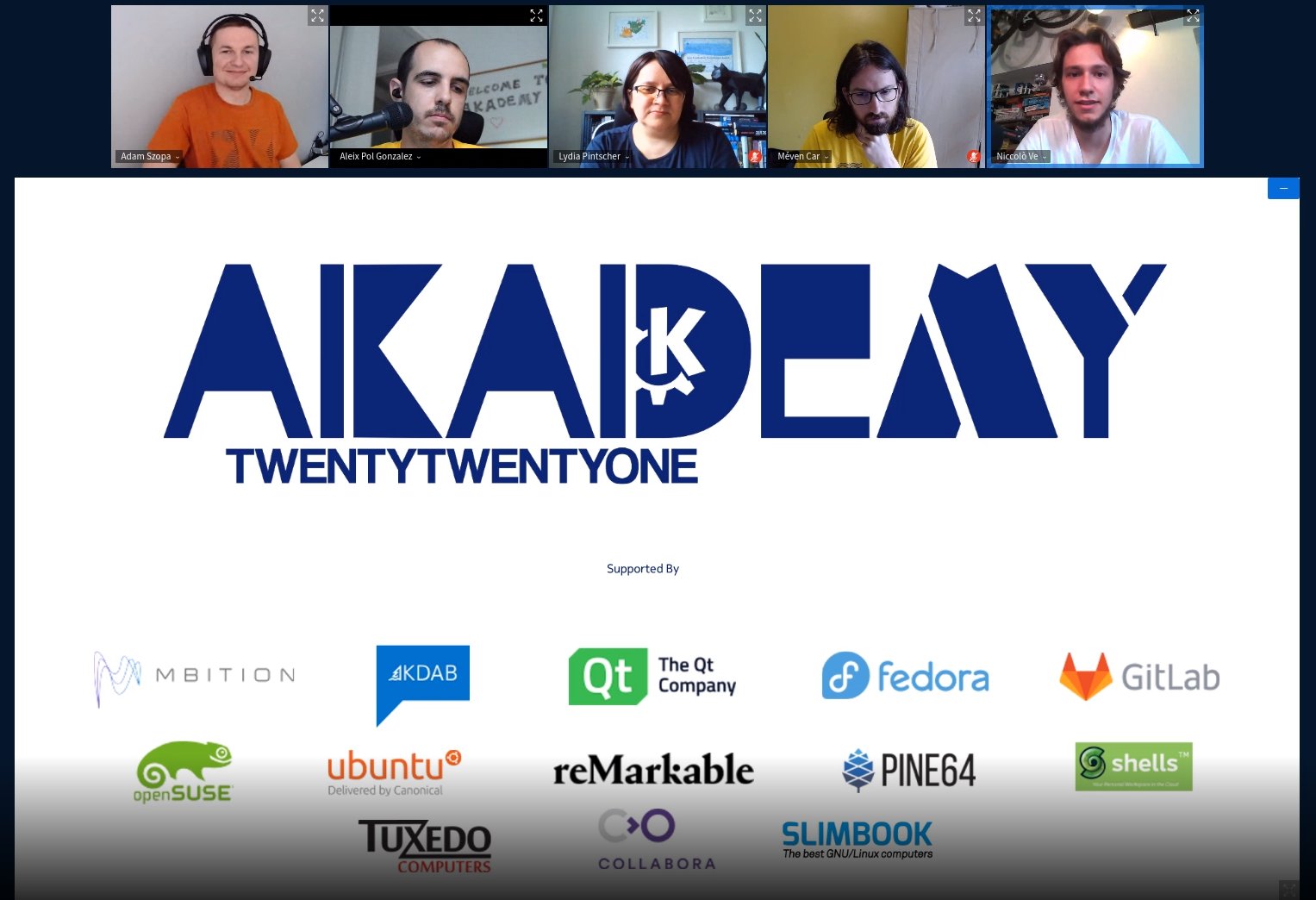
First thing in the morning, Aleix Pol, president of KDE, introduced the event at and explained how Akademy 2021 was still "special" because we could still not meet in person.
Since 2013, the KDE Student Programs has been running Season of KDE. Season of KDE is a program similar to, but not quite the same as, Google Summer of Code. It offers an opportunity for everyone (not just students) to participate in both coding and non-coding projects that benefit the KDE ecosystem. In the past few years, SoK participants have not only created new application features, but have also developed the KDE Continuous Integration System, statistical reports for developers, a web framework, ported KDE applications, created documentation, and contributed to KDE with lots and lots of other tasks.
Read More
GCompris is a popular collection of educational and fun activities for children from 2 to 10 years old. GCompris has become popular with teachers, parents, and, most importantly, kids from around the world and offers an ever-growing list of activities -- more than 150 at the last count. These activities have been translated to over 20 languages and cover a wide range of topics, from basic numeracy and literacy, to history, art, geography and technology.
Read More
It was a fine day in Onlineland and Akademy attendees were in a festive mood, not least because they were ready to celebrate the successful migration of KDE to GitLab. Although a titanic effort, the move is already paying off, as GitLab offers an easier and more flexible platform for developers and users to get their work done and shared.
Read More
Day 2 of the conference stretch of Akademy (day 3 of the overall event) kicked off with a heavy-duty programming courtesy of Ivan Čukić who talked about C++17 and 20 Goodies. Most KDE applications are developed using C++ so Ivan covered the new features that C++17 and 20 bring and how they could be combined with each other.
Read More
Written by Blumen Herzenschein, David C. and Paul Brown
The first day of Akademy talks were varied and interesting, covering a wide range of topics, from managing project goals and technical advances in Qt and KDE technologies, to Open Source in dentistry and Linux in automobiles.
Akademy kicked off today with training sessions on several KDE-related topics.
In the morning, Nuno Pinheiro from KDAB conducted a class on UI/UX Design in QML for Desktop. This online workshop contained practical exercises on dos, don'ts, and integration; and tips on outside of the box UI design. The session started out with attendees relaying to Nuno the projects they were working on and how they hoped the lesson would help them.
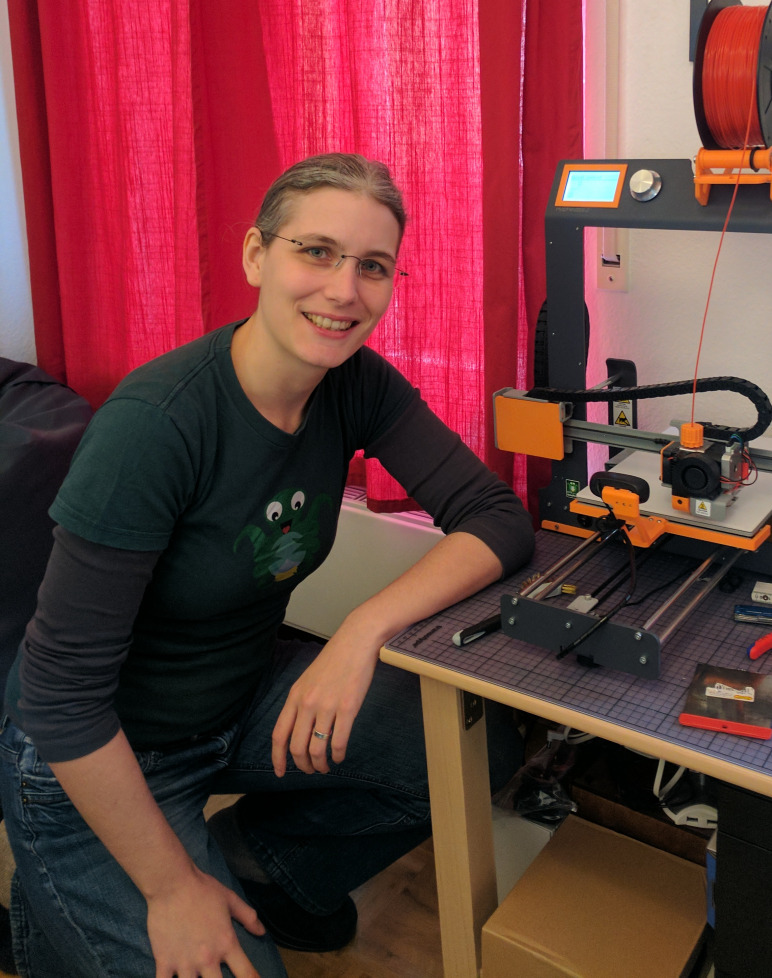
Gina Häußge's biggest claim to fame may be OctoPrint, the most popular software for managing 3D printers from small, single board computers -- like the Raspberry Pi, Odroid, etc..
Dolphin, KDE's file explorer, for example, adds previews for more types of files and improvements to the way long names are summarized, allowing you to better see what each file is or does. Dolphin also improves the way you can reach files and directories on remote machines, making working from home a much smoother experience. It also remembers the location you were viewing the last time you closed it, making it easier to pick up from where you left off.
Once again, KDE and GNOME are teaming up to bring you THE conference for people interested in establishing Linux as a great end-user platform. At the Linux App Summit we work on making app creation for users easy and worthwhile.
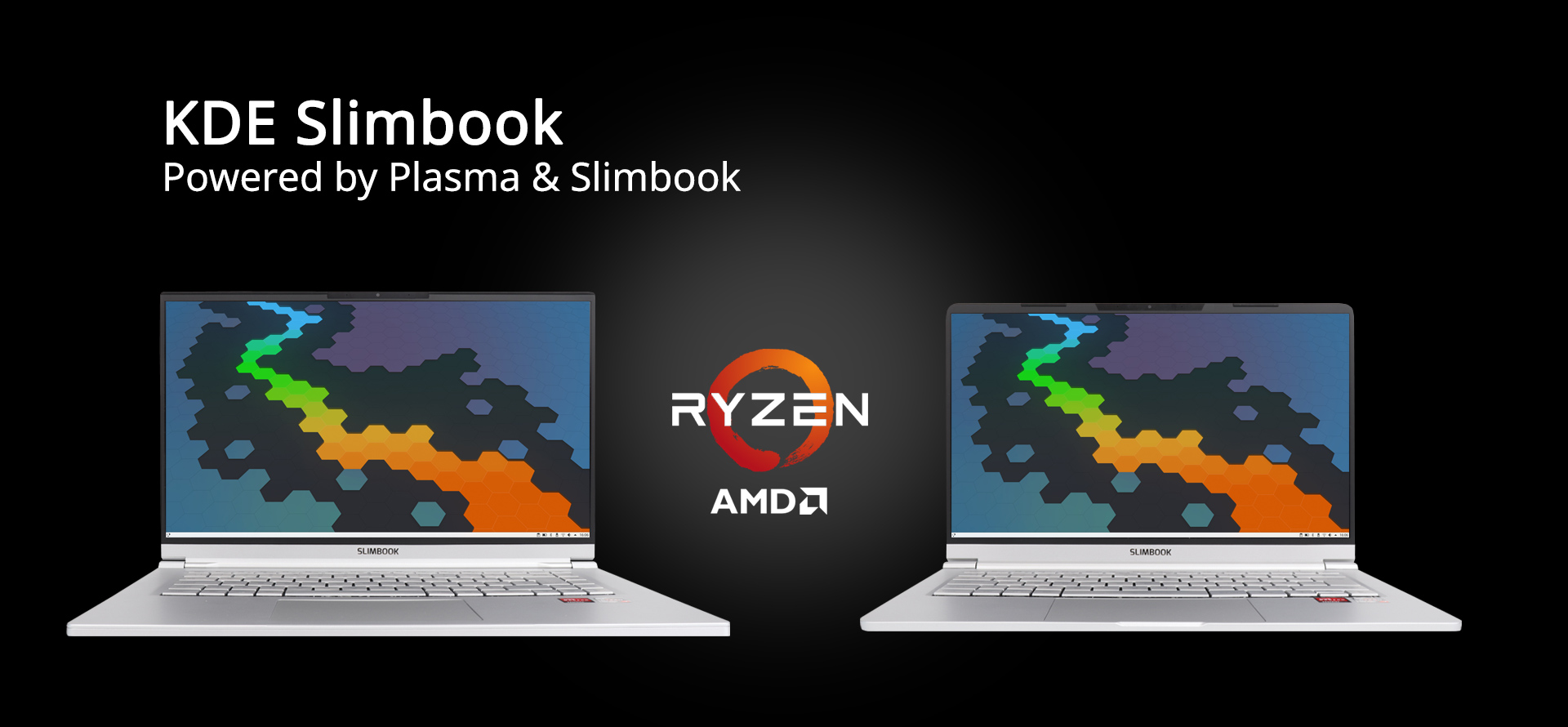
Today Slimbook and KDE launch the new KDE Slimbook.
The third generation of this popular ultrabook comes in a stylish sleek magnesium alloy case that is less than 20 mms thick, but packs under the hood a powerful AMD Ryzen 7 4800 H processor with 8 cores and 16 threads. On top of that runs KDE's Plasma desktop, complete with a wide range of preinstalled, ready-to-use Open Source utilities and apps.
Plasma 5.19 is out! If we gave alliterative names to Plasma releases, this one could be "Polished Plasma". The effort developers have put into squashing bugs and removing annoying papercuts has been immense.
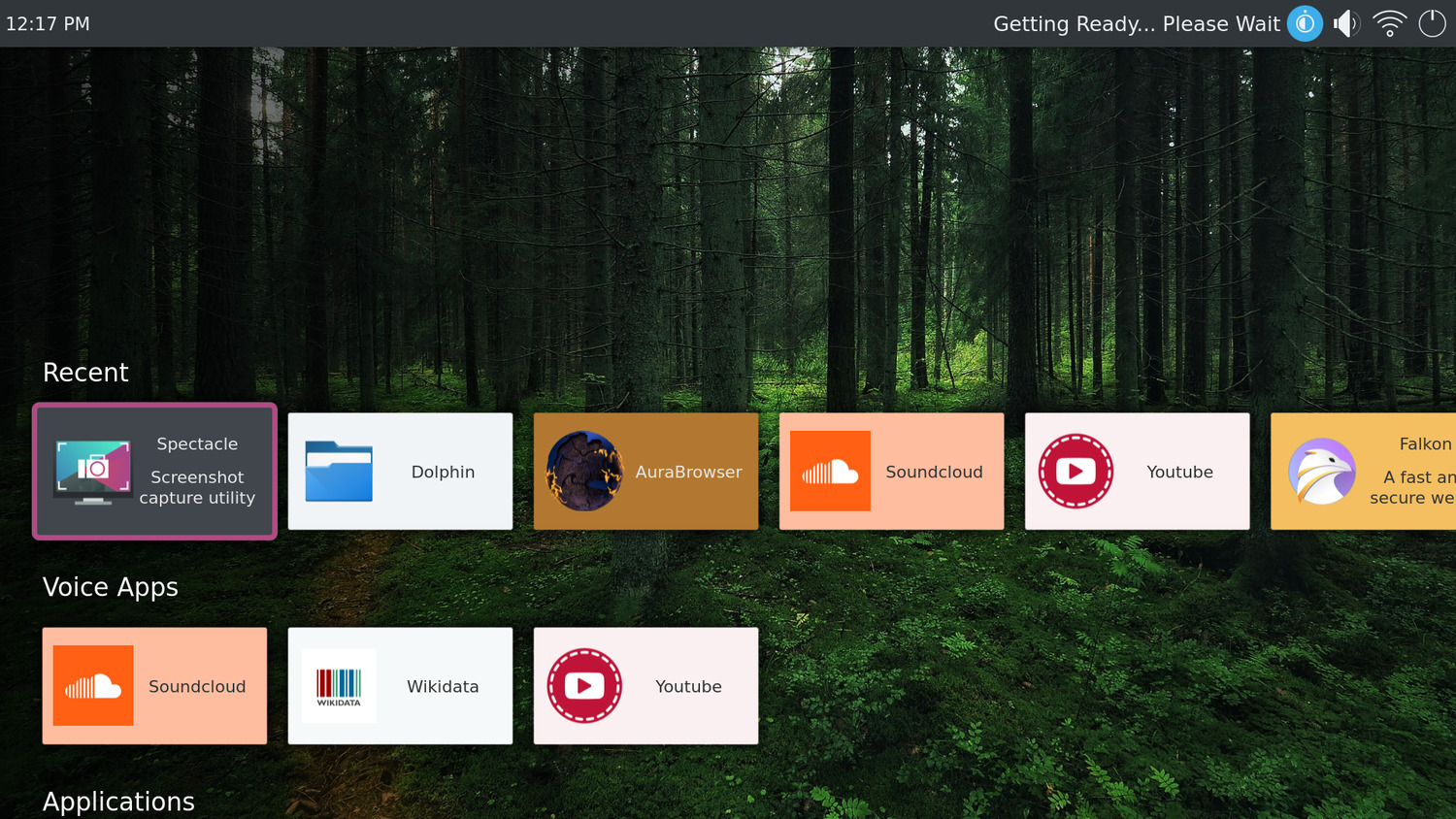
Plasma Bigscreen powers the interface on a Single Board Computer and uses the Mycroft AI voice assistant to provide a Smart TV platform. Plasma Bigscreen will deliver not only media-rich applications, but also traditional desktop applications redesigned to fit the Bigscreen experience.
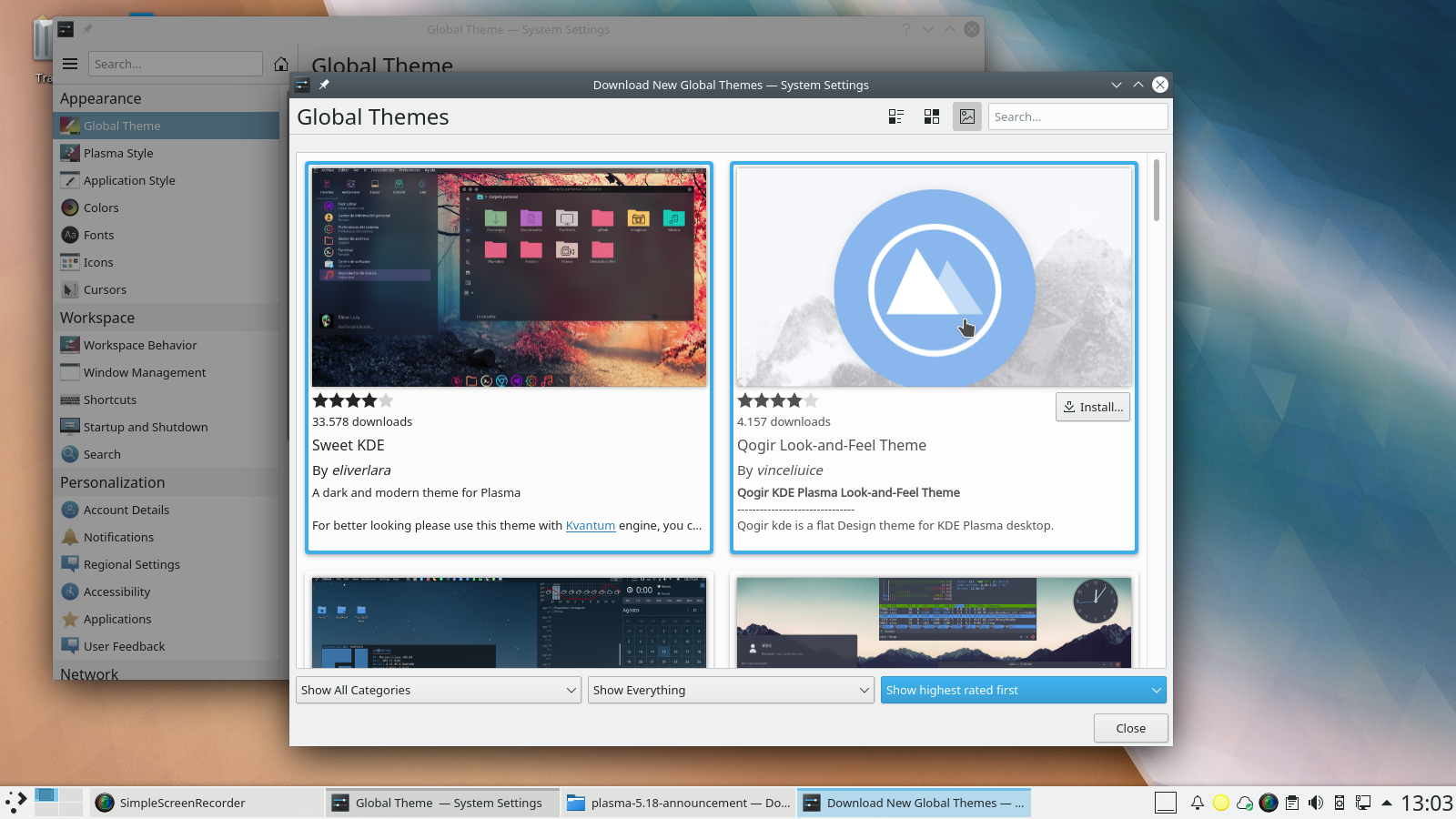
In Plasma 5.18 you will find neat new features that make notifications clearer, settings more streamlined and the overall look more attractive. Plasma 5.18 is easier and more fun to use, while at the same time allowing you to be more productive when it is time to work.
We are excited to announce that KDE e.V. has received a donation of 880,000 HNS coins (roughly 79,000 euros) from the Handshake Foundation.
This is the not the first time Handshake has made a substantial donation to the KDE Community. Back in 2018 Handshake donated approximately USD 300,000 to KDE which was used to finance projects and fund activities.
KDE is running a competition in search of the next great promotional video for KDE's Plasma desktop and KDE's applications.
The prizes are two fantastic TUXEDO computers, one per category, which will undoubtedly boost your film rendering capacity. There are also 12 goodie packages for runner-ups, and who doesn't need more Linux shirts, caps and stickers?
A fully functional Plasma desktop with a Windows 7 theme.
Microsoft will stop providing updates for Windows 7 on January 14 2020.
There won't be any more patches that correct bugs or even dangerous vulnerabilities. This will leave Windows 7 users exposed to all sorts of bad stuff. But that is not a huge concern for Microsoft. With this move, Redmond hopes to encourage users to upgrade to Windows 10.
Creating new applications is the easy part. Maintaining them, making them safer and faster and adding features that make them more useful to users is what marks the difference between one-shot wonders and solid tools you can trust and enjoy for years. That is why KDE developers are constantly renewing and updating their applications, making them more reliable, more useful, and in general, just better.
KDE launches the new version of its acclaimed desktop environment, Plasma 5.17.
Plasma 5.17 is the version where the desktop anticipates your needs. Among many new features and improvements, your desktop now starts up faster; Night Color, the color-grading system that relaxes your eyes when the sun sets, has landed for X11; your Plasma desktop recognizes when you are giving a presentation, and stops messages popping up in the middle of your slideshows; and, if you are using Wayland, Plasma now comes with fractional scaling, which means that you can adjust the size of all your desktop elements, windows, fonts and panels perfectly to your HiDPI monitor.
Akademy 2019 brought the KDE community some exciting news and major changes. The new community-wide goals have been announced, and KDE contributors presented new ideas and projects they are working on.
Read More
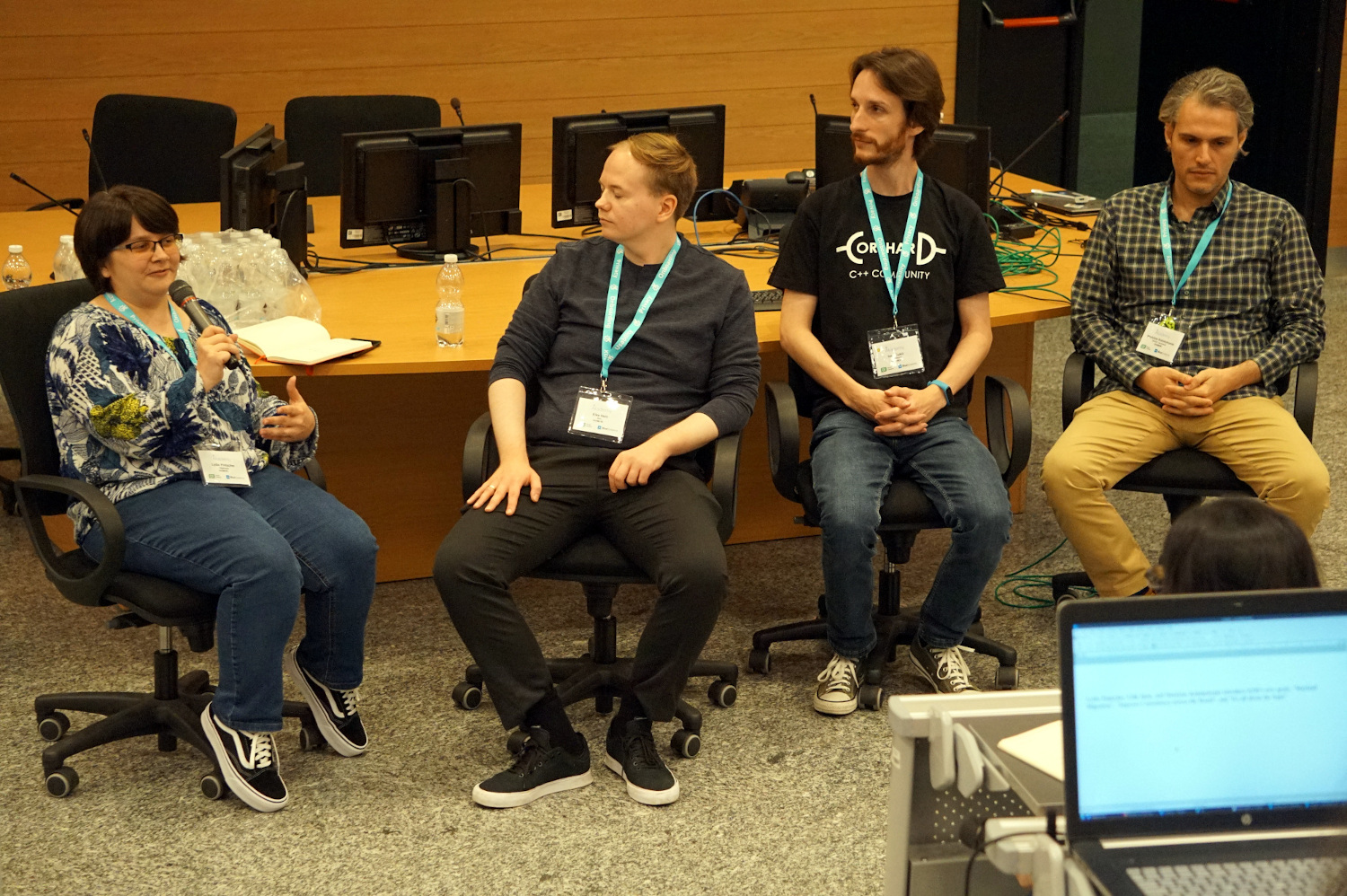
Lydia Pintscher, Eike Hein, Ivan Cukic and Neofytos Kolokotronis discuss the results of the past goals.
The KDE Community has spoken! On the first day of Akademy 2019, Lydia Pintscher, President of KDE e.V., announced the three new goals we will prioritize over the next 2 years.
Lars Knoll has been working on Qt for a long time. It is now 20 years since he joined Trolltech and even longer since he started developing crucial pieces of the KDE ecosystem. In that time, he went from theoretical physicist to software engineer to project leader, and survived the many roughs-and-tumbles Qt went through, including the event that nearly killed the project brought on by a certain company from Redmond.
LAS 2019 will be held in Barcelona, Spain from November 12th to November 15th. Our Call for Participation opens on July 31st, and will run until August 18th.
On day one (Saturday, September 7), the teams that have been working on the community goals over the last two years will discuss how things worked out and what has been achieved (spoiler: a lot). As many of the procedures and processes developed for the goals have now been worked into the everyday ways the KDE community operates and builds things, it is time to look for new goals. That is precisely what will be happening next, when the panel unveils what the community has decided to work on in the next two years.
Say hello to Plasma 5.16, a the newest iteration of KDE's desktop environment, chock-a-block with new features and improvements.
For starters, check out the new notification system! Not only can you mute notifications altogether with the Do Not Disturb mode, but the system also groups notifications by app. Like this, when you run through the history of past notifications, you can see all the messages from KDE Connect in one category, the download information in another, email alerts in a third, and so on.
The GNOME and KDE communities are looking for locations for the Linux App Summit (LAS) 2019, an event that will be held sometime between September and December 2019.
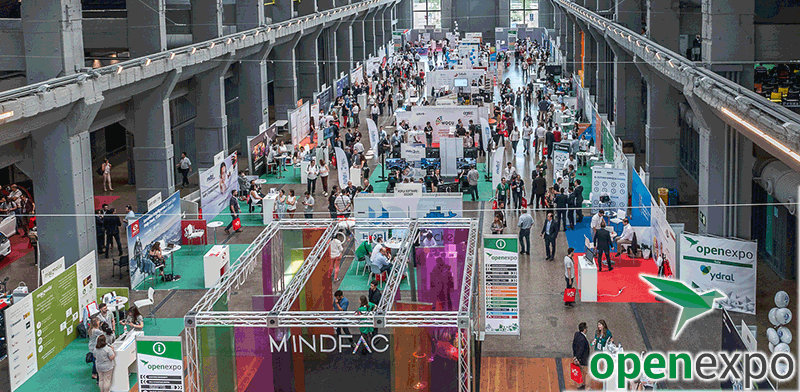
The event is held in Madrid, Spain, and the organisers have kindly given us a space on the exhibition floor. We will be showcasing the best of what KDE has to offer in the business world. This will include devices that will show off the versatility and potential of Plasma and Plasma Mobile on everything - from mobiles, embedded devices, SBCs and low-powered devices (like the Pinebook), to its capability for adapting to vehicle infotainment systems and high-end ultrabooks, like the KDE Slimbook.
The KDE Community is happy to announce that we have been selected to participate in Google Summer of Code. This will be our our 14th year of mentoring students.
KDE has been looking for a better way of chatting and live-sharing information for several years now. IRC has been a good solution for a long time, but our channels are currently on servers KDE cannot control. It also lacks features users have come to expect from more modern IM services. Other alternatives, such as Telegram, Slack and Discord, although feature-rich, are centralized and built around closed-source technologies and offer even less control than IRC. This flies in the face of KDE's principles that require we use and support technologies based on Free software.
This February release of KDE Plasma comes with a wide range of new features and improvements. The main focus of developers has been stamping out all minor problems and papercuts of the desktop, aiming to make Plasma smoother and easier to use.
Despite the rain and the cold, there is always a place that is warm and welcoming in Brussels in February - the KDE booth at FOSDEM 2019.
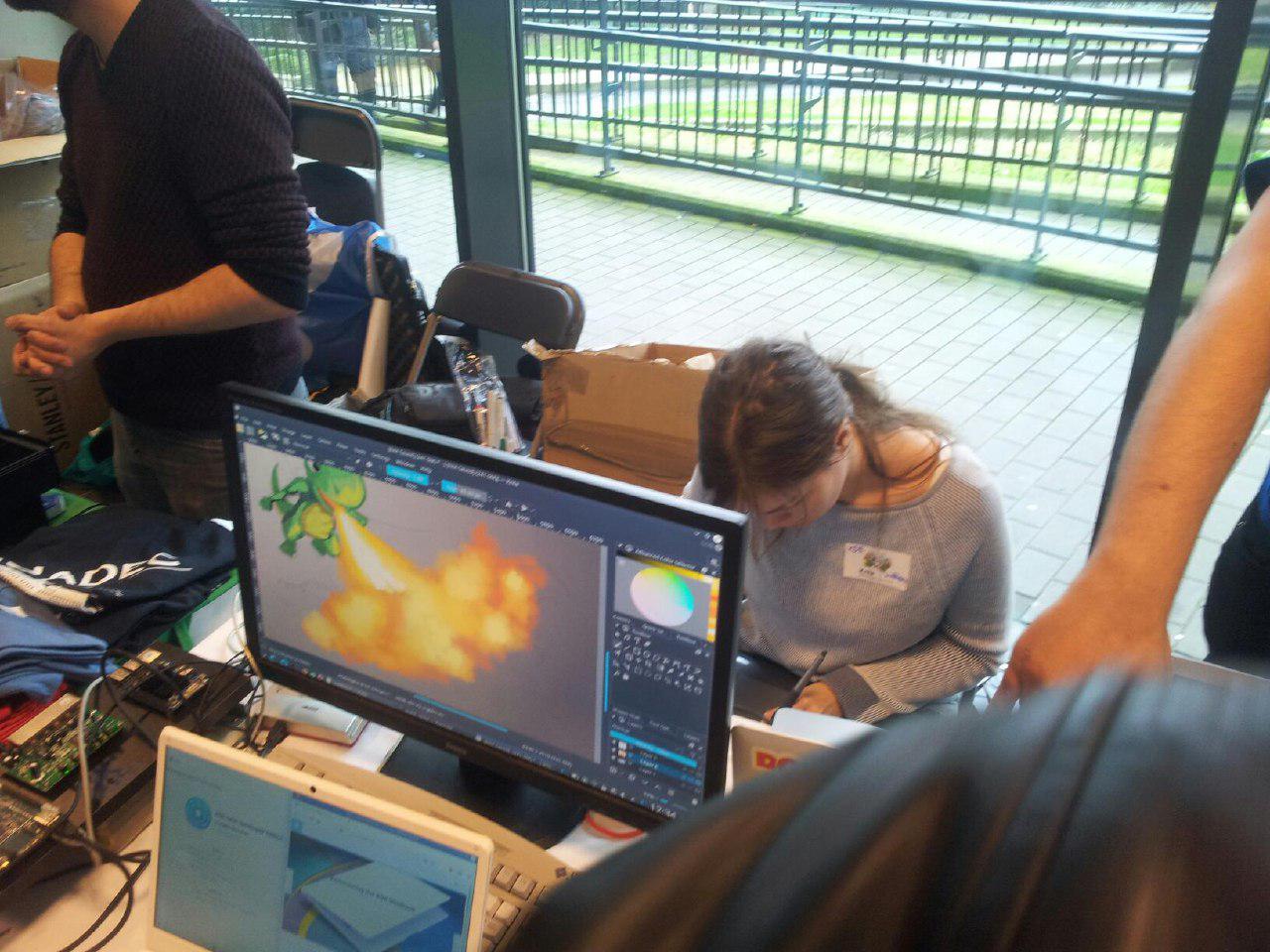
Live Krita demo at FOSDEM 2018.
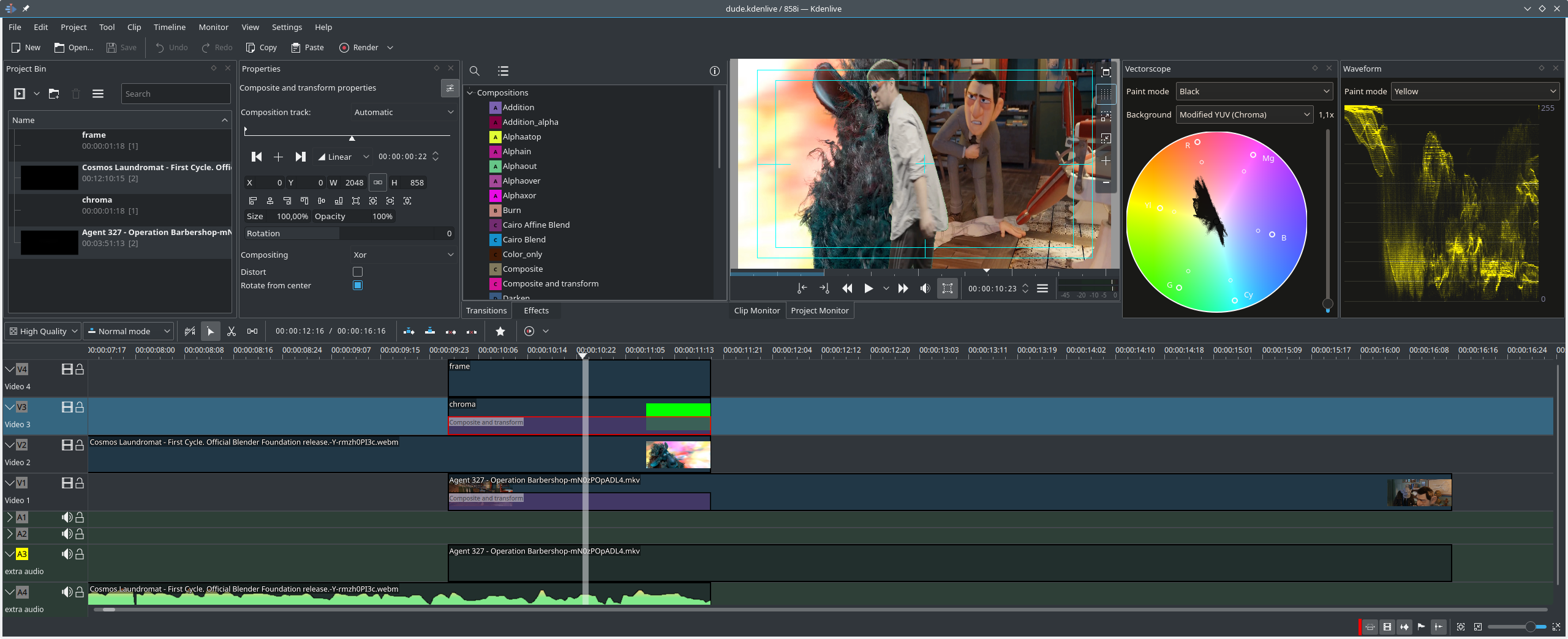
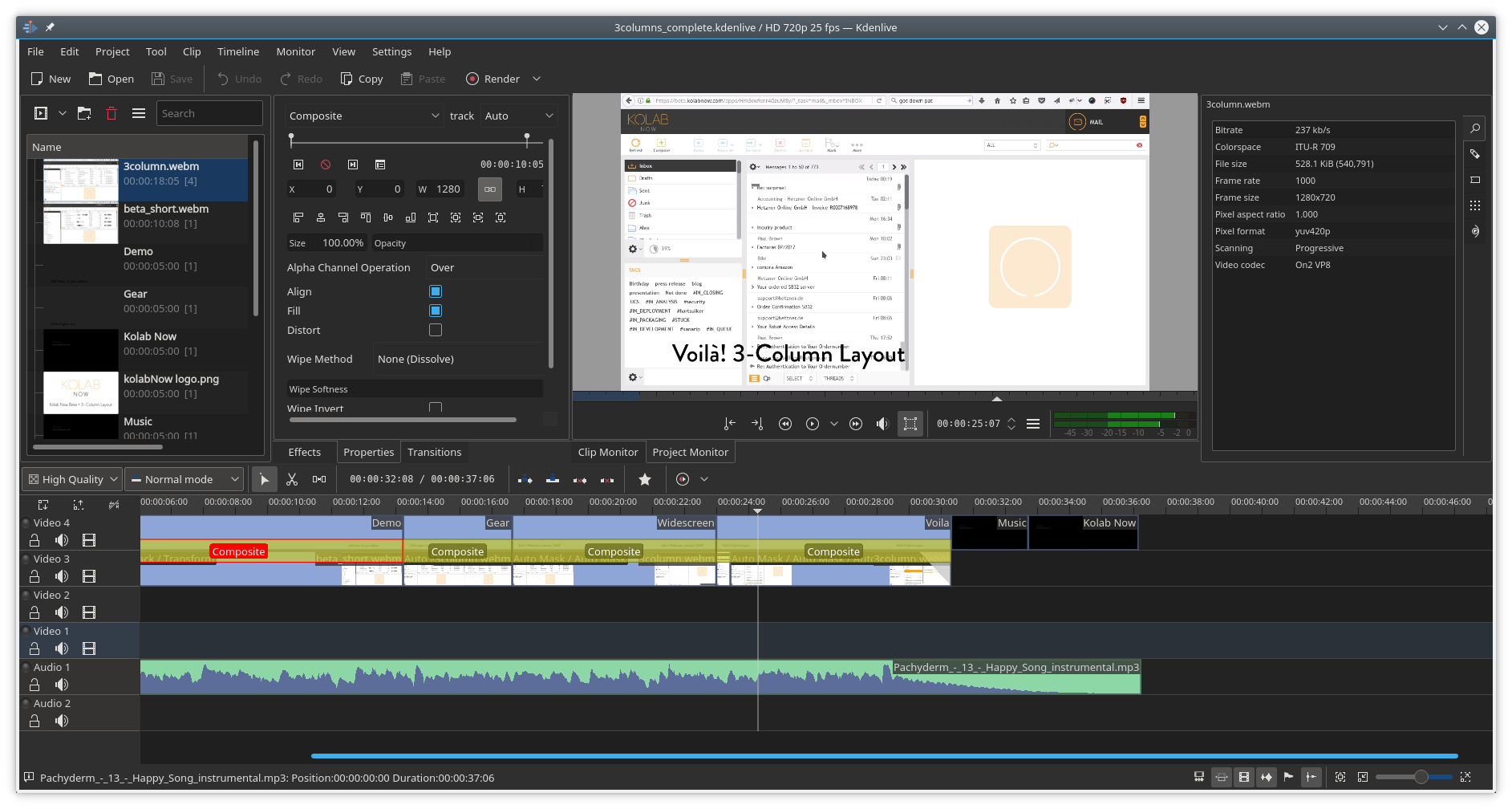
This year we are jam-packing it with interesting stuff. The first thing you'll see as you arrive is Krita's demo. Wolthera van Hövell, a talented artist that regularly contributes to Krita, will be painting live at the booth, demonstrating all the new features on a large screen for everybody to enjoy. Then on Sunday, Camille Moulin will be demonstrating how to edit video using Kdenlive.
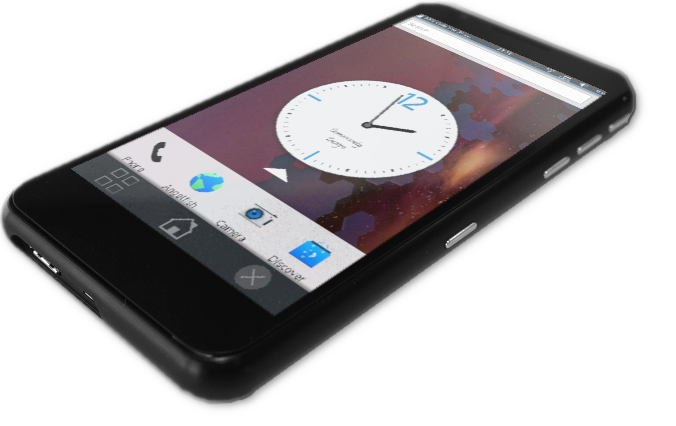
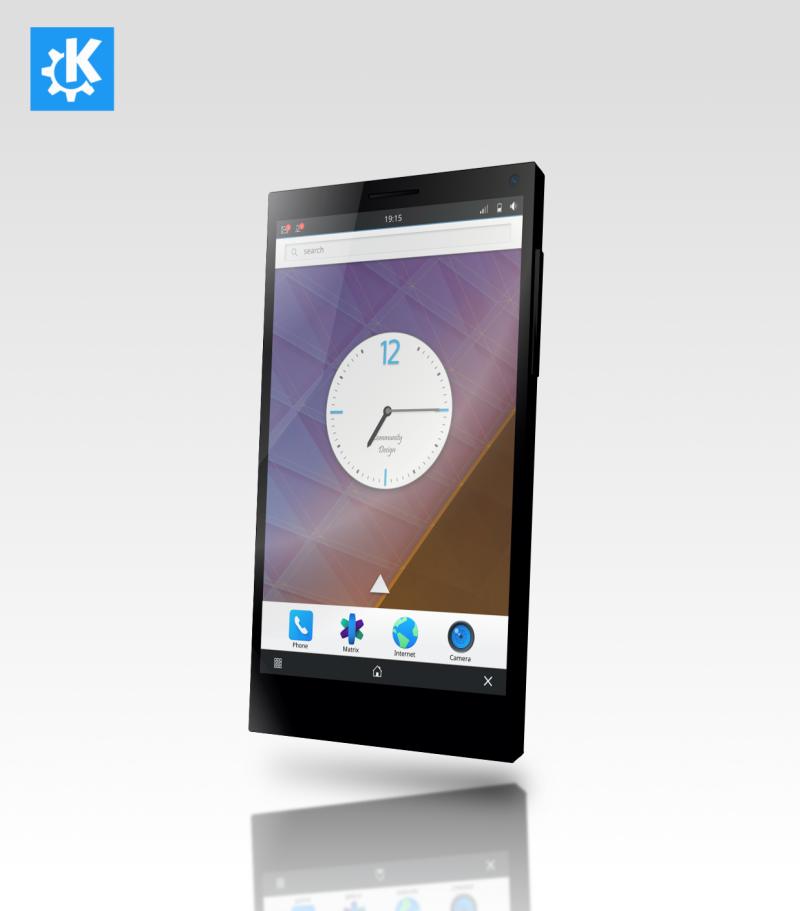
Necuno Solutions and KDE are collaborating to offer Plasma Mobile on the Necuno Mobile, a device Necuno describes as "a truly open source hardware platform".
With a focus on openness, security and privacy, the Necuno Mobile is built around an ARM® Cortex®-A9 NXP i.MX6 Quad and a Vivante GPU. According to Necuno, none of the closed firmware has access to the memory.
Akademy 2018 is less than a week away. Apart from meeting up again with friends and colleagues, the KDE community has another reason to be joyful: this year we have broken the record for the number of sponsors for the event. Although there have been many sponsors of Akademy over the years, never have there been so many at one time.
Optimized and less resource-hungry, Plasma 5.13 can run smoothly on under-powered ARM laptops, high-end gaming PCs, and everything in between.
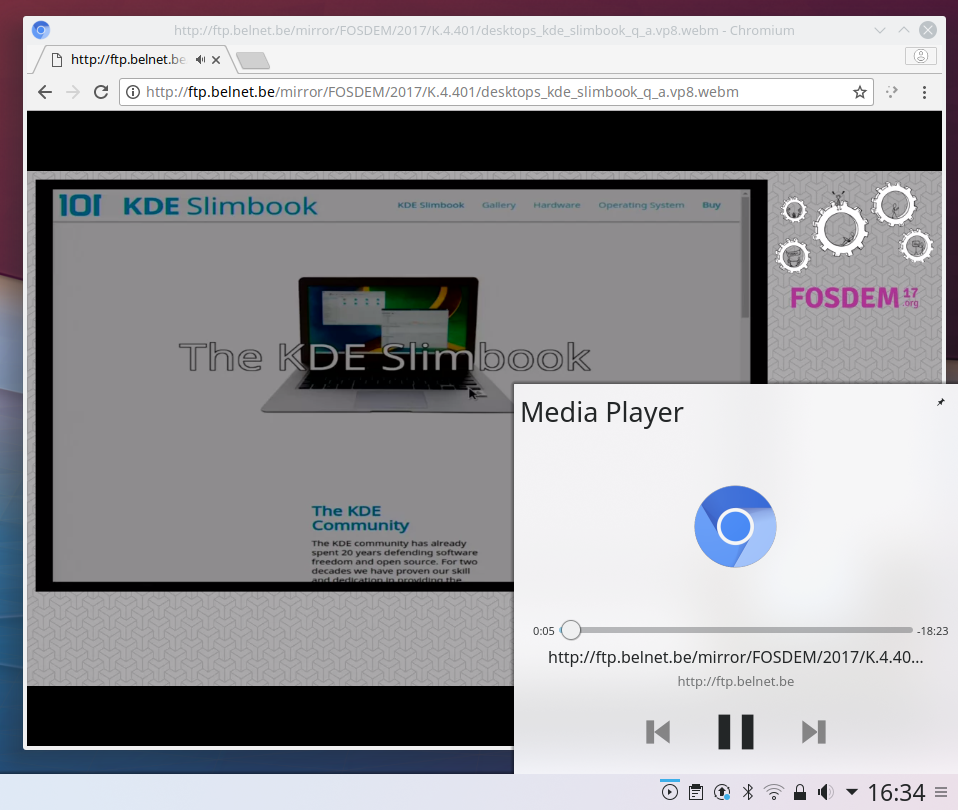
Control play back, rewind and volume even if your browser is not visible.
Feature-wise, Plasma 5.13 comes with Browser Integration. This means both Chrome/Chromium and Firefox web browsers can be monitored and controlled using your desktop widgets. For example, downloads are displayed in the Plasma notification popup, so even if your browser is minimized or not visible, you can monitor the download progress. Likewise with media playing in a tab: you can use Plasma's media controls to stop, pause and silence videos and audio playing in any tab – even the hidden ones. This a perfect solution for those annoying videos that auto-start without your permission. Another Plasma-browser feature is that links can now be opened from Plasma's overhead launcher (Krunner), and you can also send links directly to your phone using KDE Connect.
February was a big month for the Promo team - we held a long-awaited sprint in Barcelona, Spain from the 16th to 18th. The aim of the sprint was to look at information we had collected over the prior years, interpret what it meant, and use it to discuss and plan for the future. The activities we came up with should help us accomplish our ultimate goal: increasing KDE's visibility and user base.
On Monday, a security vulnerability in the OpenPGP and S/MIME email encryption standards and the email clients using those, called EFAIL was published.
What is this about and how is KMail affected? (Spoiler: KMail users are safe by default.)
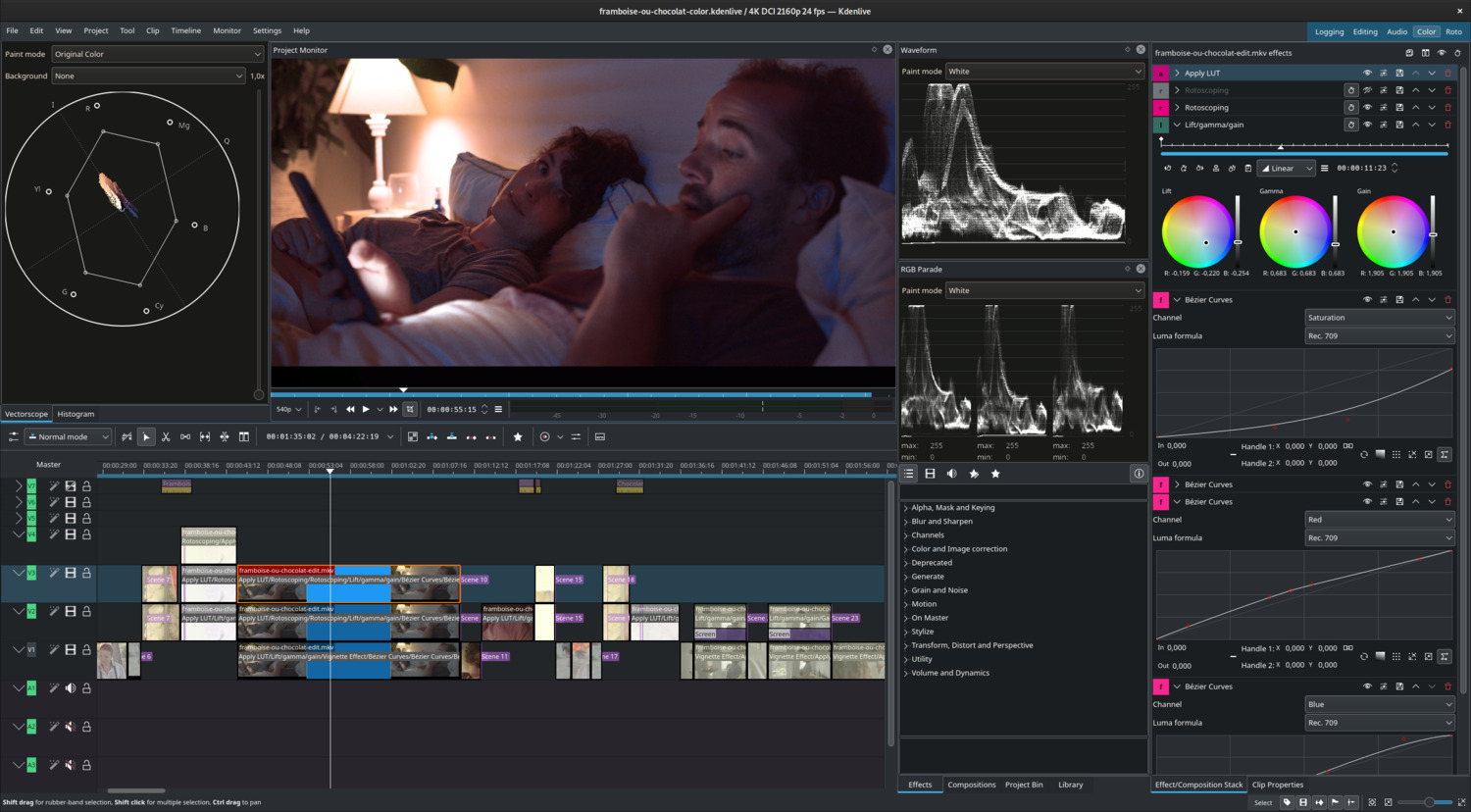
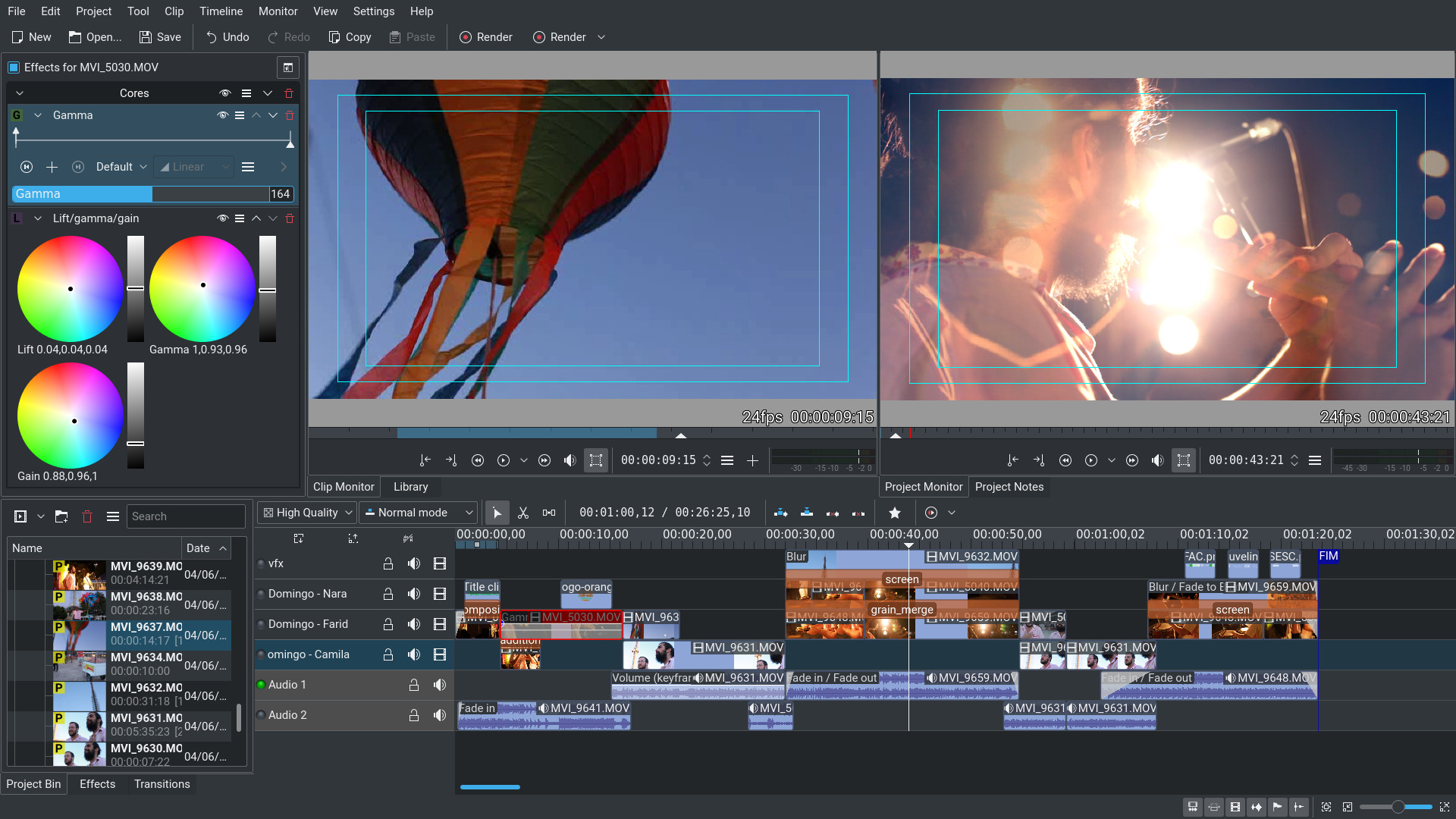
Kdenlive is KDE's advanced video-editor. This April, members of the Kdenlive project met up for five days - from 25th to the 29th - for their spring sprint. The developers Jean-Baptiste Mardelle and Nicolas Carion, along with professional community videomakers Farid Abdelnour, Rémi Duquenne and Massimo Stella, got together at the Carrefour Numérique in Paris to push the project forward.
Akademy 2018 organisers have published the program for the conference part of the event. This year the event will be held in Vienna, and talks will take place on the 11th and 12th of August.
The sprint will run from the 25th to the 29th of April, and two days will be open to the public. On Friday, 27th of April, from 4pm to 6pm the event will be open to anyone interested in getting involved. You can meet the team and learn how you can contribute to the project. On Saturday, 28th of April at 2.45pm, there will be a public presentation. You can discover Kdenlive as used by professional editors and learn about the new features.
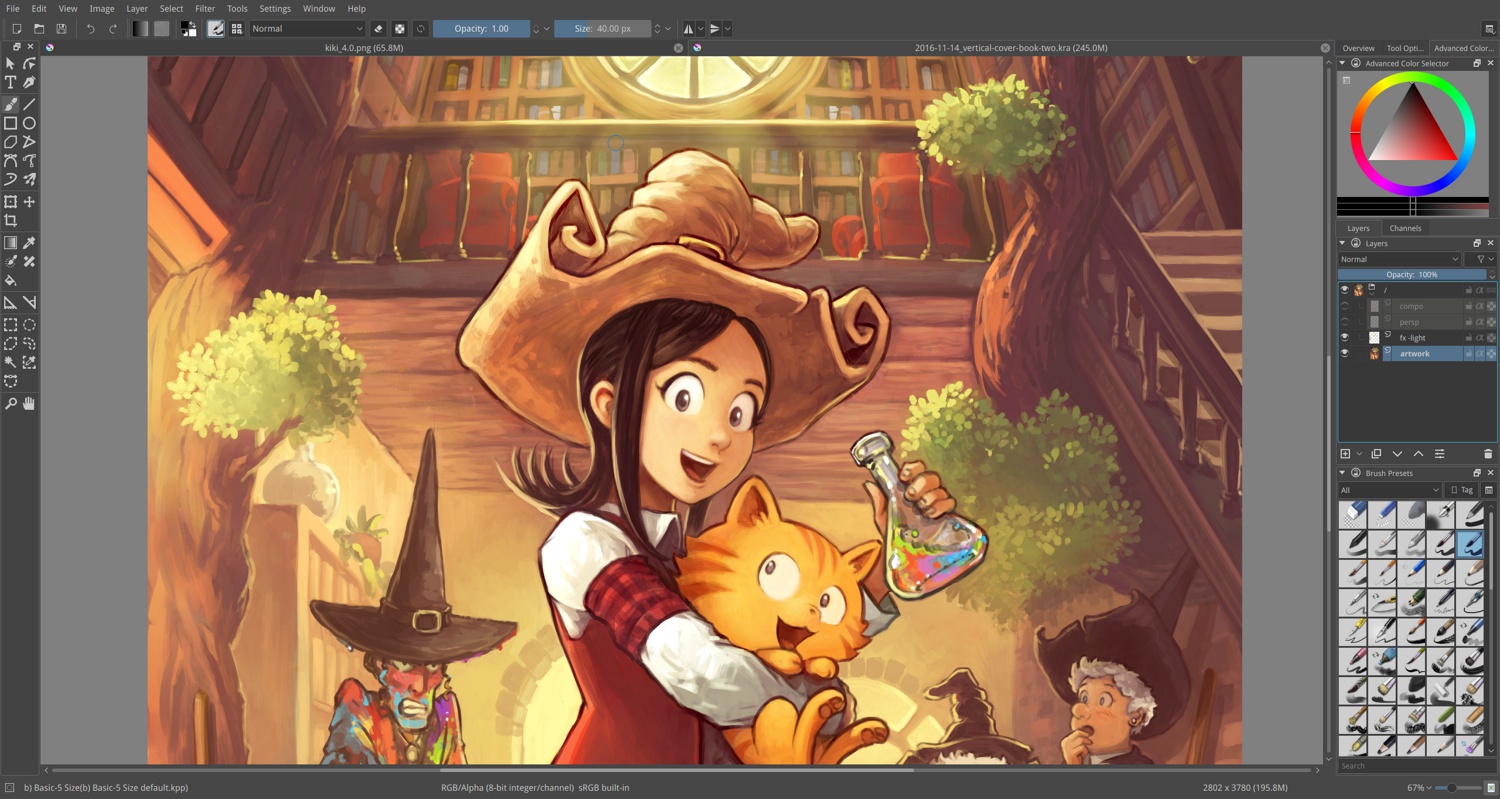
That Krita has become one of the most popular applications for painting among digital artists is an understatement. The great thing is that, with every new version, Krita just gets better and better. The latest release is a perfect example of that. Check out what you can look forward to in the new 4.0 version:
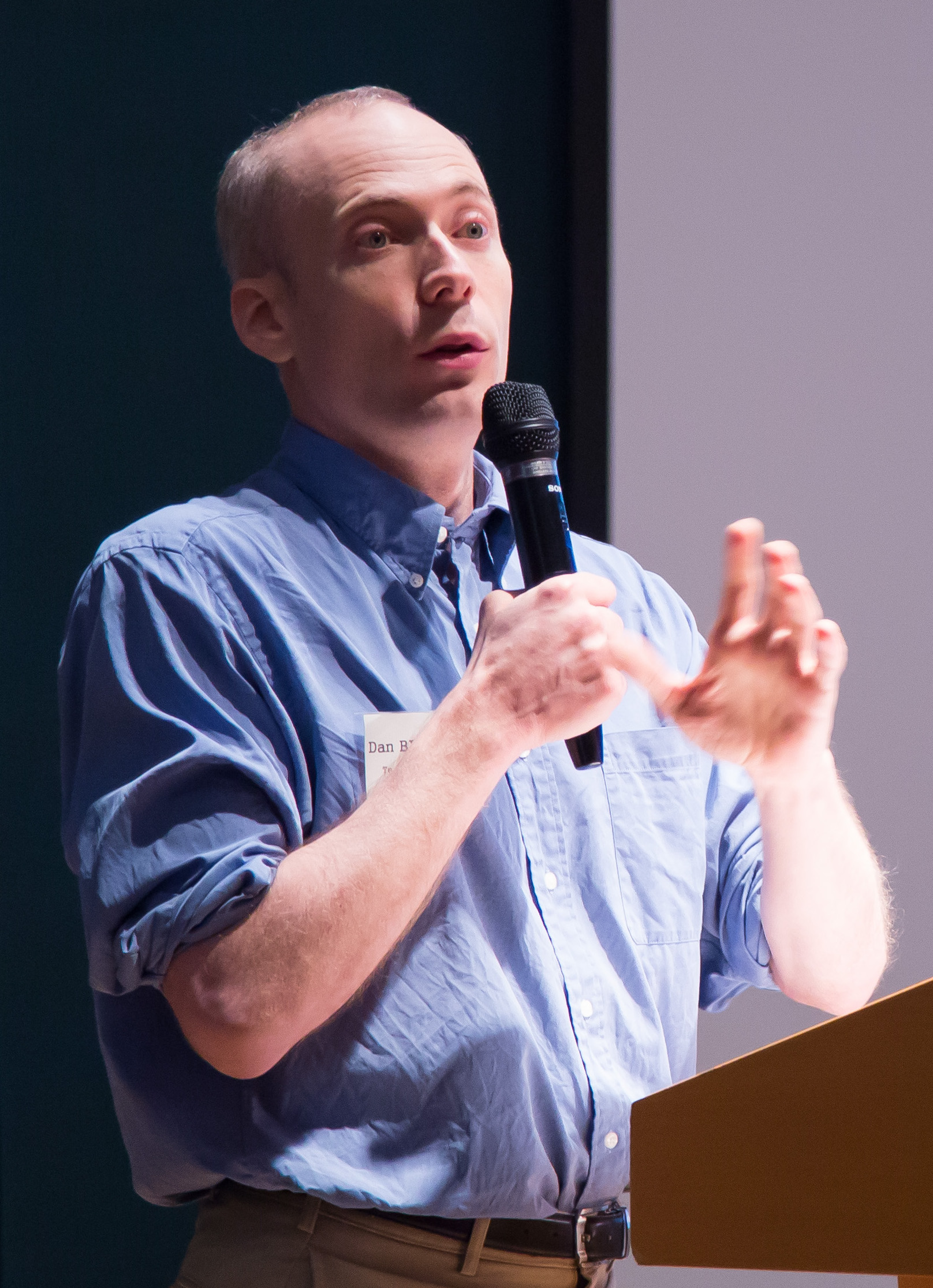
Dan Bielefeld speaks at a Transitional Justice Working Group event.
Dan Bielefeld is an activist that works for a South Korean NGO. Dan worked in the Washington, D.C. area training young activists in the areas of politics and journalism before going into researching atrocities committed by the North Korean regime. He is currently the Technical Director of the Transitional Justice Working Group and helps pinpoint the locations of mass burial and execution sites using mapping technologies.
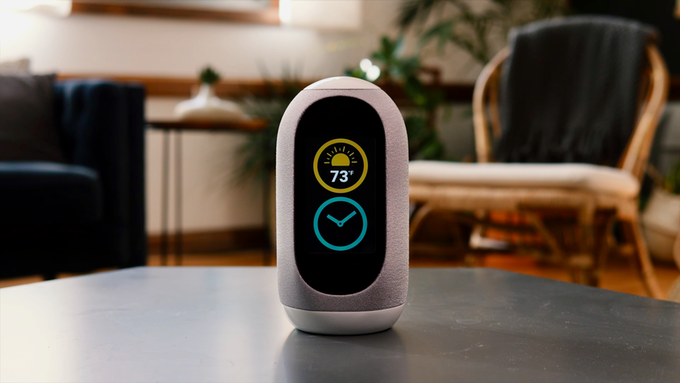
Did you know you can install an AI personal assistant on your Plasma desktop?
Mycroft is running through the last 24 hours of the crowdfunding campaign for its Mark II assistant. The machine looks awesome and offers similar functionality to other proprietary alternatives, but with none of the spying and leaking of personal data.
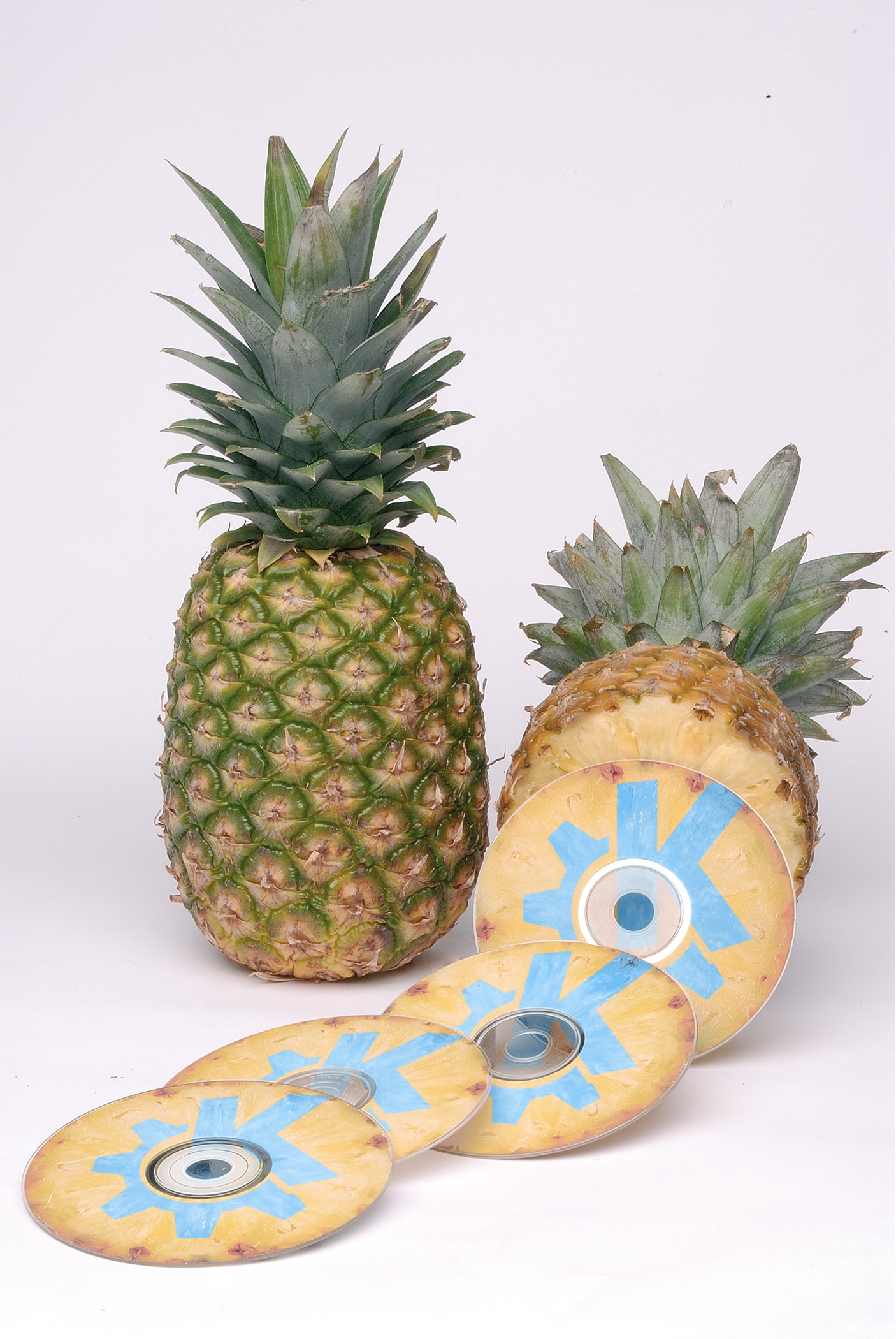
KDE e.V. is announcing today it has received a donation of 200,000 USD from the Pineapple Fund.
With this donation, the Pineapple Fund recognizes that KDE as a community creates software which benefits the general public, advances the use of Free Software on all kinds of platforms, and protects users' privacy by putting first-class and easy to use tools in the hands of the people at zero cost. KDE joins a long list of prestigious charities, organizations and communities that the Pineapple Fund has so generously donated to.
To start with, it comes with a choice between an Intel i5: 2.5 GHz Turbo Boost 3.1 GHz - 3M Cache CPU, or an Intel i7: 2.7 GHz Turbo Boost 3.5 GHz with a 4M Cache. This makes the KDE Slimbook II 15% faster on average than its predecessor. The RAM has also been upgraded, and the KDE Slimbook now sports 4, 8, or 16 GBs of DDR4 RAM which is 33% faster than the DDR3 RAM installed on last year's model.
Although performance and stability have been the prime goals for this version of Plasma, some of the new features include spring-loaded folder views, improved Wayland support, interactive notifications, and more.Read More
Remember to donate to our End of Year fundraiser and support our community and its work.
It's the time of year for recaps. We already talked about the advancements in KDE's software, and it makes sense we talk about that first. To many people and for many years, "KDE" was synonymous with a desktop environment and its applications. That is, KDE was its software.
The KDE community has spoken and it has chosen the proposals which will define the general direction of the KDE project over the next three or four years.
The motto of our space at QtWS this year has been "Power up!". We put it into practice in more than one way and in the most literal of senses. Read More
Artist's impression of what Plasma Mobile would look like on the Librem 5.
"This was the plan all along", said Todd Weaver during a conference call we held with him last week. He was referring to building a free, open, and privacy-respecting smartphone.
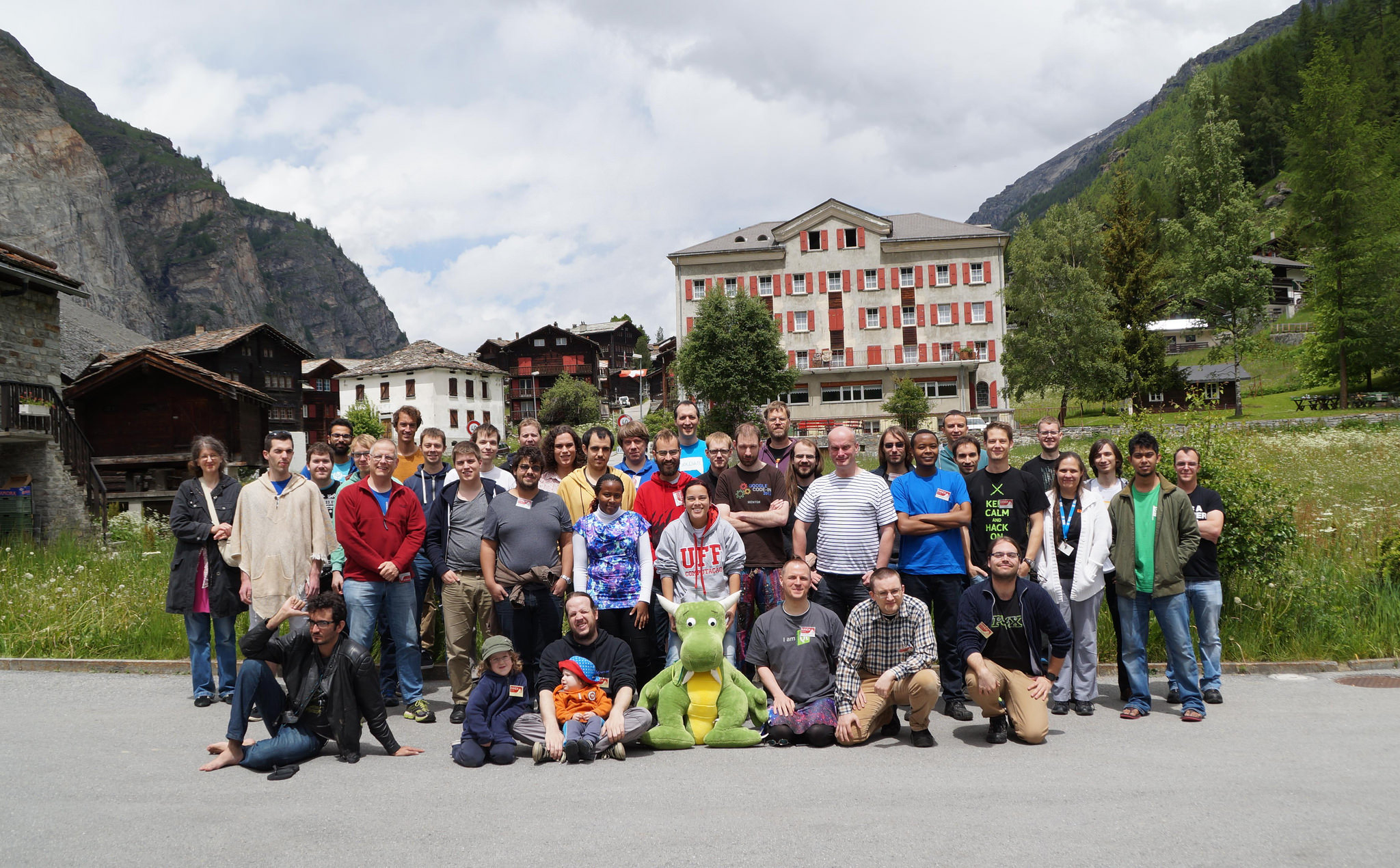
The 2017 edition of Akademy was held in Almería, Spain. Starting officially on the 22nd of July and ending on the 27th, the weekend was dedicated to talks, as is customary. The rest of the following week, from Monday to Thursday, was dedicated to workshops and BoFs — Birds of a Feather — sessions in which community members interested in the same things meet and work together.
Antonio Larrosa advocates building intracommunity relationships.
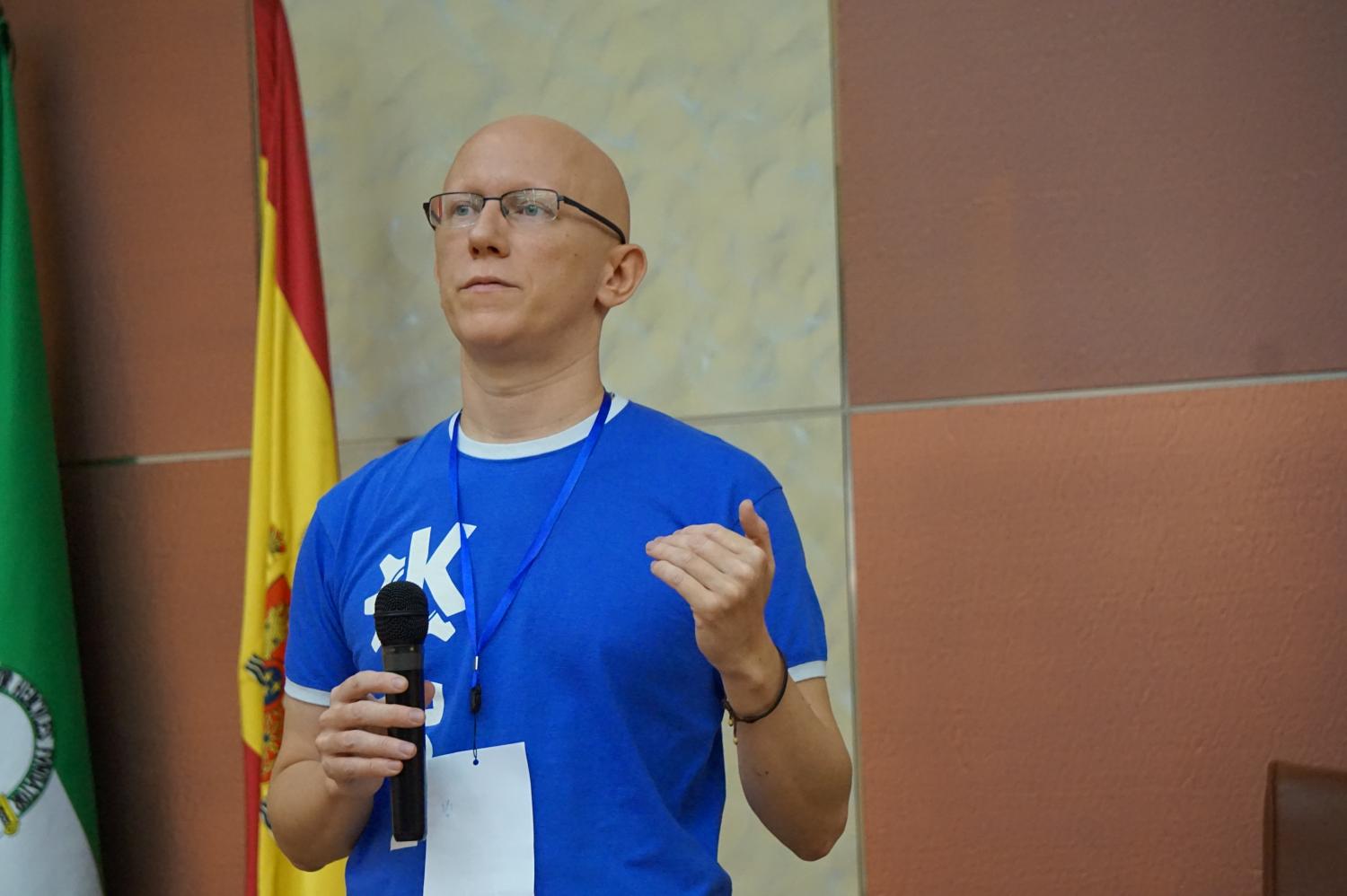
Antonio Larrosa kicked off Sunday with his talk on The KDE Community and its Ecosystem. He expressed concern about what he perceived as an increase in the isolation of certain communities and laid out the advantages of working on intra-community relationships.
The weather was balmy at the beginning of the day and, although Aleix Pol said it was not hotter than a hot day in Barcelona, many of the Scandinavian and Scottish attendees were visibly wilting under the sun. Fortunately for them, the venue is equipped with air-conditioning.
Antonio Larrosa is the current president of KDE España and he and I have been friends for quite some time now. It may seem logical, since we both live in Málaga, are passionate about Free Software in general, and KDE in particular. But in most other respects we are total opposites: Antonio is quiet, tactful, unassuming and precise. Enough said.
Robert Kaye is definitely a brainz-over-brawn kinda guy. As the creator of MusicBrainz, ListenBrainz and AcousticBrainz, all created and maintained under the MetaBrainz Foundation, he has pushed Free Software music cataloguing-tagging-classifying to the point it has more or less obliterated all the proprietary options.
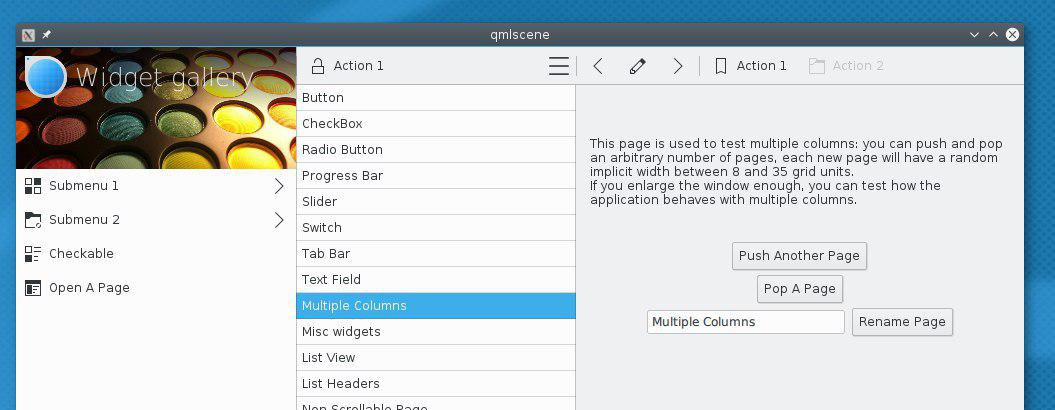
Kirigami UI lets you easily design and create convergent apps that work on desktop and mobile environments. Platforms supported by Kirigami UI include Windows, Android, and Linux. Kirigami is especially indicated for KDE's Plasma Desktop and the upcoming Plasma Mobile platform, KDE's graphical environment for mobile devices. Apps developed with Kirigami will probably also work on MacOS X and iOS with minimal tweaking, although these platforms are not officially supported yet.
Q:With some free software phone projects ending, what does Plasma Mobile's future look like?
A: The future is rosy. While it is true that Plasma Mobile used to be built on the Ubuntu Phone codebase, that was superseded some time ago. The recent events at Ubuntu and other mobile communities have not modified the pace of the development (which is pretty fast) or the end goal, which is to build frameworks that will allow convergence for all kinds of front-ends and apps on all kinds of devices.